Genshin Impact Iktomi Spiritseeking Scrolls: Complete Fragmented Records Guide
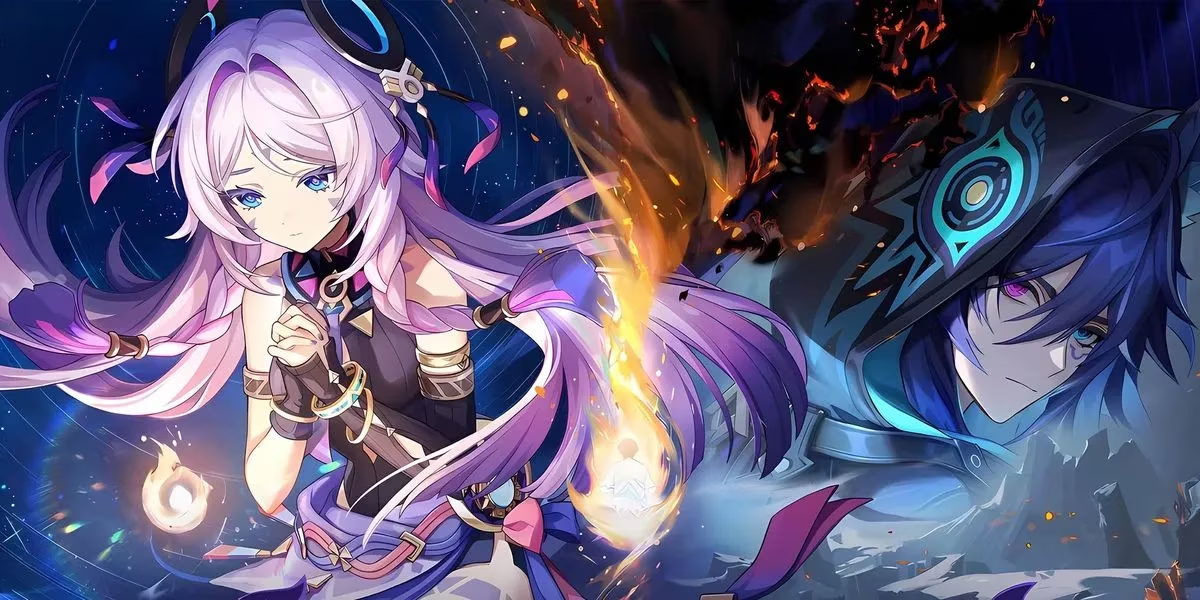
Genshin Impact's Iktomi Spiritseeking Scrolls invites Travelers into a mystical challenge where fragmented records must be restored to rescue lost spirits. The event centers on Ororon and Citlali, two characters whose endless squabbling provides both comic relief and narrative depth. Their conflict frames a deeper task: reassembling a spirit trapped between realms. By solving layered image puzzles, players piece together the past and bring a wandering soul closer to peace. In 2026, this event remains a memorable example of how HoYoverse blends story, puzzle mechanics, and character charm within Teyvat. The Iktomi Spiritseeking Scrolls is not merely a collection of image puzzles; it is a storytelling device that asks players to rebuild memory itself.
Event Overview
The Iktomi Spiritseeking Scrolls contains eight stages, each tied to a Clairvoyant Shard. Players rearrange layers of fragmented illustrations to restore portraits of key figures. The stages are:
| Stage | Clairvoyant Shard | Puzzle Notes |
|---|---|---|
| 1 | Sanhaj | Tutorial stage; simple layering from the base of the face upward. |
| 2 | Menilek | A layered restoration puzzle that rewards patience and careful observation. |
| 3 | Sundjatta | Can be solved without moving layers if pieces are placed in the correct order. |
| 4 | Wanjiru | Tricky stage requiring precise placement of forehead, face, eyepatch, hair, and shoulder pieces. |
| 5 | Tupac | Sequence begins with the neck, then head, hair, blue face piece, and clothing. |
| 6 | Burkina | Contains the most pieces and presents a unique, demanding challenge. |
| 7 | Ororon | Requires orderly layering of hair, hoodie, and face. |
| 8 | Citlali | Complex hair layers demand meticulous arrangement and alignment. |
Each stage asks the player to think like a restorer of ancient art. The goal is not simply to finish quickly, but to understand how each fragment supports the whole. A misplaced layer can obscure a face, hide a braid, or break the silhouette of a character. The event therefore transforms observation into a tactical exercise.
Stage-by-Stage Guide
Clairvoyant Shard: Sanhaj
The first stage serves as a tutorial, making the reconstruction simple. Players should start from the base of the face and proceed layer by layer until Sanhaj's figure is complete. It is easier to solve this puzzle from bottom to top. Follow these steps:
-
Place two items for the hat.
-
Move the face part down two layers to fit under the hats.
-
Position the hair above the face, then lower it three layers.
-
Create the coat using the remaining pieces.
This gentle introduction teaches the core mechanic: layers can be moved, stacked, and adjusted until the illustration matches the original. Once Sanhaj is restored, the event's rhythm becomes clear.
Clairvoyant Shard: Menilek
The Menilek stage is listed among the eight fragmented records and follows the same layer-based logic. Although the reference guide does not break down every movement, players can apply the same principles used in Sanhaj: identify the largest shapes first, anchor the face or torso, then place smaller details such as hair, clothing, and accessories. Menilek rewards careful scanning of the silhouette before any layer is moved.
Clairvoyant Shard: Sundjatta
Players can solve the Sundjatta puzzle without moving layers. The correct sequence is:
-
Start with the brown triangle for facial features.
-
Place the right side of the face, followed by the left side.
-
Position the hair and facial hair above the face pieces.
-
Complete the image with the collar, necklace, and shoulder piece.
Because no layer shifting is required, Sundjatta is a test of order and recognition. The brown triangle acts as a visual anchor, and every subsequent piece falls into place around it.
Clairvoyant Shard: Wanjiru
This stage can be tricky. Here is how to reconstruct the image:
-
Start with the purple box on the forehead.
-
Layer the face and complete it with the eyepatch.
-
Add Wanjiru's hair and shoulder pieces in the correct order.
The eyepatch is a small but crucial element. If it is placed too early or too late, the face layers may not align. Players should watch the forehead marker and build outward from there.
Clairvoyant Shard: Tupac
To restore Tupac, follow this sequence:
-
Begin with the neck, then place the head and hair.
-
Add the blue piece to color the face and finish with the clothing.
The blue piece is the key to unifying the portrait. Once the neck and head are stable, the blue face layer and clothing complete the character's recognizable look.
Clairvoyant Shard: Burkina
Burkina contains the most pieces, presenting a unique challenge. There is no single shortcut; players must tackle each section carefully. The best approach is to sort pieces by size and function, then reconstruct the image in clusters: face, hair, clothing, and accessories. Burkina tests endurance and attention to detail more than any other stage.
Clairvoyant Shard: Ororon
Start reconstructing Ororon's image by layering his hair, hoodie, and face in orderly succession until complete. The hoodie and hair create overlapping shapes, so players should confirm each layer's position before adding the next. Ororon's portrait becomes clear only when the face sits correctly beneath the hood and hair.
Clairvoyant Shard: Citlali
Citlali's complex hair layers require meticulous arrangement:
-
Start with the face background.
-
Attach the braids, ensuring they align with the base.
-
Add the remaining hair and clothing pieces by layering correctly.
Citlali's braids are the most delicate part of the puzzle. If they are misaligned, the rest of the hair may not fit. Players should zoom in mentally, check the base, and build the hairstyle step by step.
Tips for Restoring Fragmented Records
-
🧩 Work from bottom to top whenever possible. Base layers often define the final silhouette.
-
🔍 Study the target image before moving pieces. A few seconds of observation can save minutes of trial and error.
-
🧱 Anchor large shapes first, then add small details such as eyes, accessories, and highlights.
-
🎯 Align edges carefully. A single layer offset can hide a face or distort clothing.
-
⏳ Be patient with Burkina and Citlali. These stages demand the most precision.
-
🔄 If a layer feels wrong, move it away and compare the silhouette again.
Why the Event Matters
The Iktomi Spiritseeking Scrolls not only deepens the narrative within Genshin Impact but also provides a tactical challenge through its unique puzzle gameplay. Successfully completing the fragmented records enhances the gaming experience while exploring the diverse world of Teyvat. The event's focus on memory, restoration, and spiritual rescue gives it emotional weight beyond simple puzzle solving. Ororon and Citlali's squabbling adds levity, but the underlying story treats the trapped spirit with sincerity.
For players in 2026, the event stands as a reminder of Genshin Impact's evolving event design. It combines character-driven storytelling with interactive restoration mechanics, creating a limited-time experience that rewards observation and patience. Adventurers who revisit the guide can sharpen their layer-puzzle skills and appreciate how each fragment contributes to a larger portrait. Gear up, Travelers, and do not miss the chance to restore every fragmented record.
As summarized by OpenCritic, broad critical reception often shows that memorable limited-time game content succeeds when mechanics and narrative reinforce one another, which helps explain why Genshin Impact's Iktomi Spiritseeking Scrolls stands out: its layered reconstruction puzzles are not just visual tasks, but a structured way of revealing character identity, emotional context, and the event's spirit-focused storytelling.
Discussion