Hyrule’s Detachable Parts Division Is Still Breaking Tears of the Kingdom in 2026
I have followed Tears of the Kingdom’s building scene long enough to know that its most important stories rarely begin with a shrine puzzle. In 2026, the group that still holds my attention is the Hyrule Detachable Parts Division, or HDPD: a faction of engineers, glitch hunters, and cheerful demolition experts who are not content to build with Zonai devices. They want to rip unique components out of Hyrule itself. Their goal is simple and wonderfully destructive: find one-of-a-kind parts embedded in structures, dungeons, and machines, then force those parts to become portable build materials. Nintendo clearly never intended this. That is exactly why I find it fascinating.
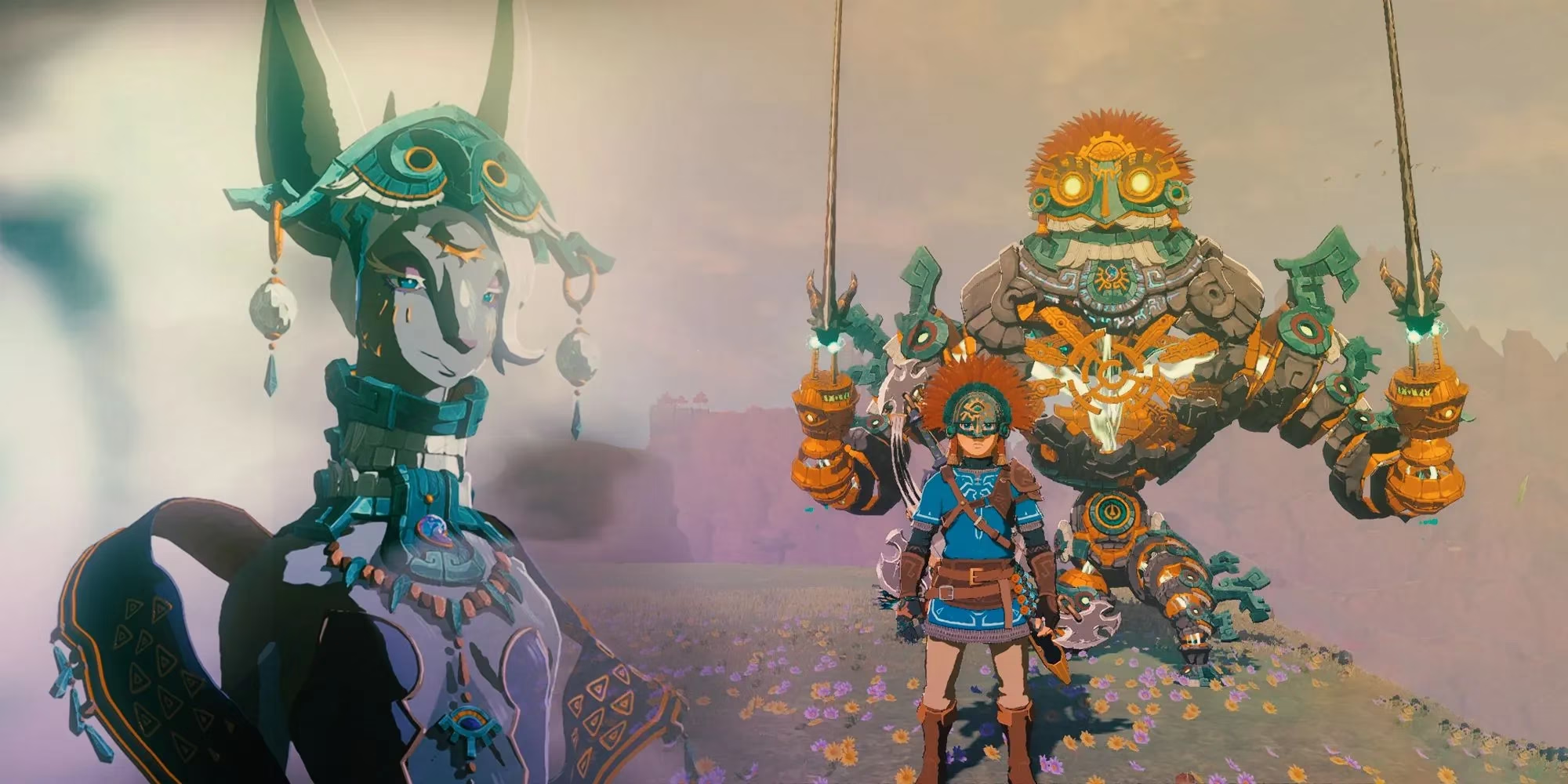
Tears of the Kingdom gives players enormous creative freedom, but it also hides invisible fences. Zonai battery charge limits how long vehicles can run. A build can attach only up to 21 items. Those constraints are practical and performance-minded, yet they have pushed the HDPD to think outside the box. Instead of asking what Link can attach, the group asks what Hyrule can be persuaded to surrender. The HDPD’s sub-Reddit has become a workshop for discussion, failed experiments, and triumphant extraction attempts. I see it as part salvage yard, part physics laboratory, and part community theater. 🔧
The clearest success story I have seen involves giant fan blades in the Left-Arm Depot of the Construct Factory. A player named MiztrSageTOTK-Only attaches four Zonai rockets to one blade of a giant fan and fits a stabilizer to the chest on the adjacent blade. The rockets spin the fan; the stabilizer fights the motion; the conflict is violent enough to break a blade loose. The player repeats the process and retrieves two giant fan blades. What happens next is even stranger. When one blade is attached to the other, it springs upright and moves unnaturally, almost like a stabilizer of its own kind. Another player, Avetharun, suggests the blades could work as powerless stabilizers. That is the HDPD in a sentence: impossible objects, accidental physics, and a new engineering idea.
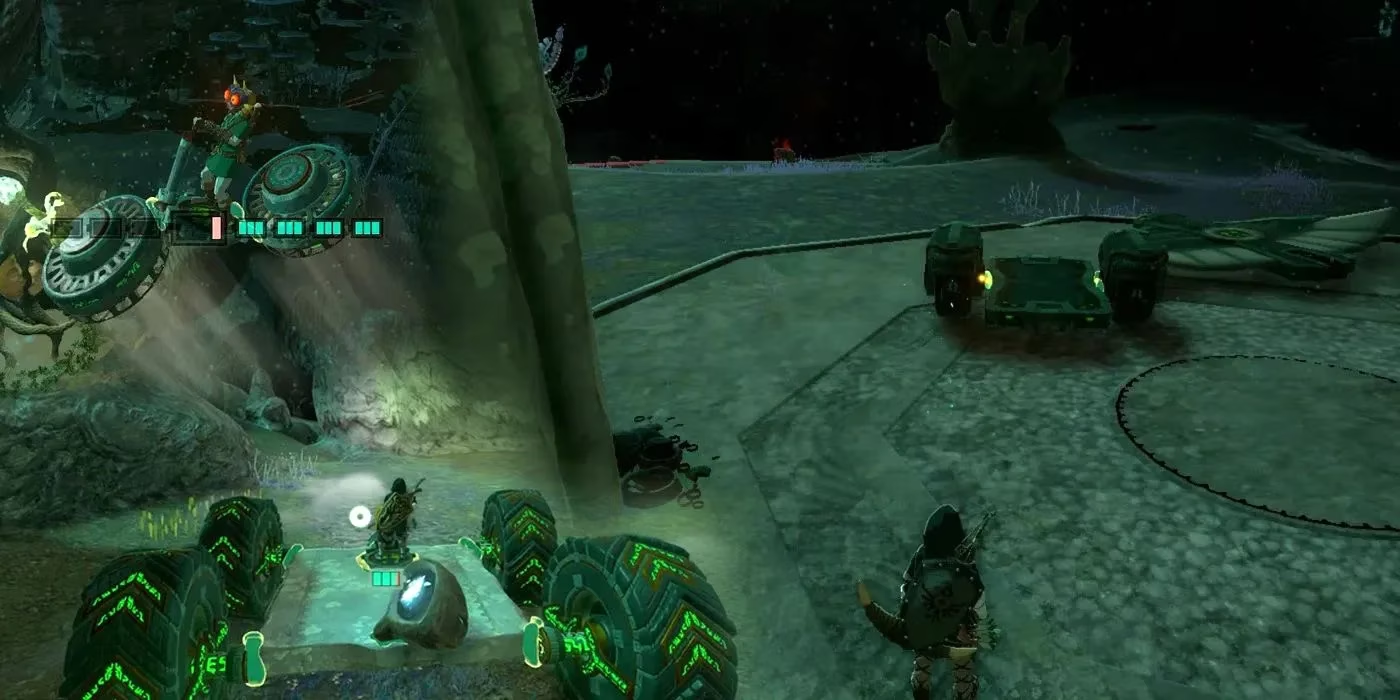
Stabilizers have become one of the group’s most effective extraction tools. In one example, venom20078 removes the railcar from the Hudson Construction site near Tarrey Town by attaching three stabilizers along the inner edge. The railcar is thrown off balance and practically hops off the rails. The result is two L-shaped platforms that are not attached in the center but are still coded as a single object in Tears of the Kingdom. I find that detail delicious: the game’s own logic becomes a material. The HDPD is not just breaking parts; it is breaking assumptions about what counts as one object.
| 🔧 Target | 🚀 Extraction method | 🧩 Result |
|---|---|---|
| Giant fan blades in Left-Arm Depot | Four rockets plus a stabilizer | Two blades detached; strange upright physics |
| Railcar near Tarrey Town | Three stabilizers along inner edge | Railcar leaves rails; two platforms coded as one object |
| Stone door in Left-Arm Depot | Zonai stakes at precise angles | Door shakes violently but remains attached |
Not every attempt succeeds, and I appreciate that the HDPD shares failures as openly as victories. The stone door in the Left-Arm Depot is a stubborn prize. It hangs from chains that normally move it once a puzzle is solved. vlhrt and others have tried Zonai stakes wedged into the doorframe at careful angles, but the door only trembles. It looks ready to pop free; it never does. Link can squeeze past, but the door stays put. That failure is useful because it shows the limits of the craft. The HDPD is not a magic cheat menu. It is a community of experimenters testing a game’s seams in public.
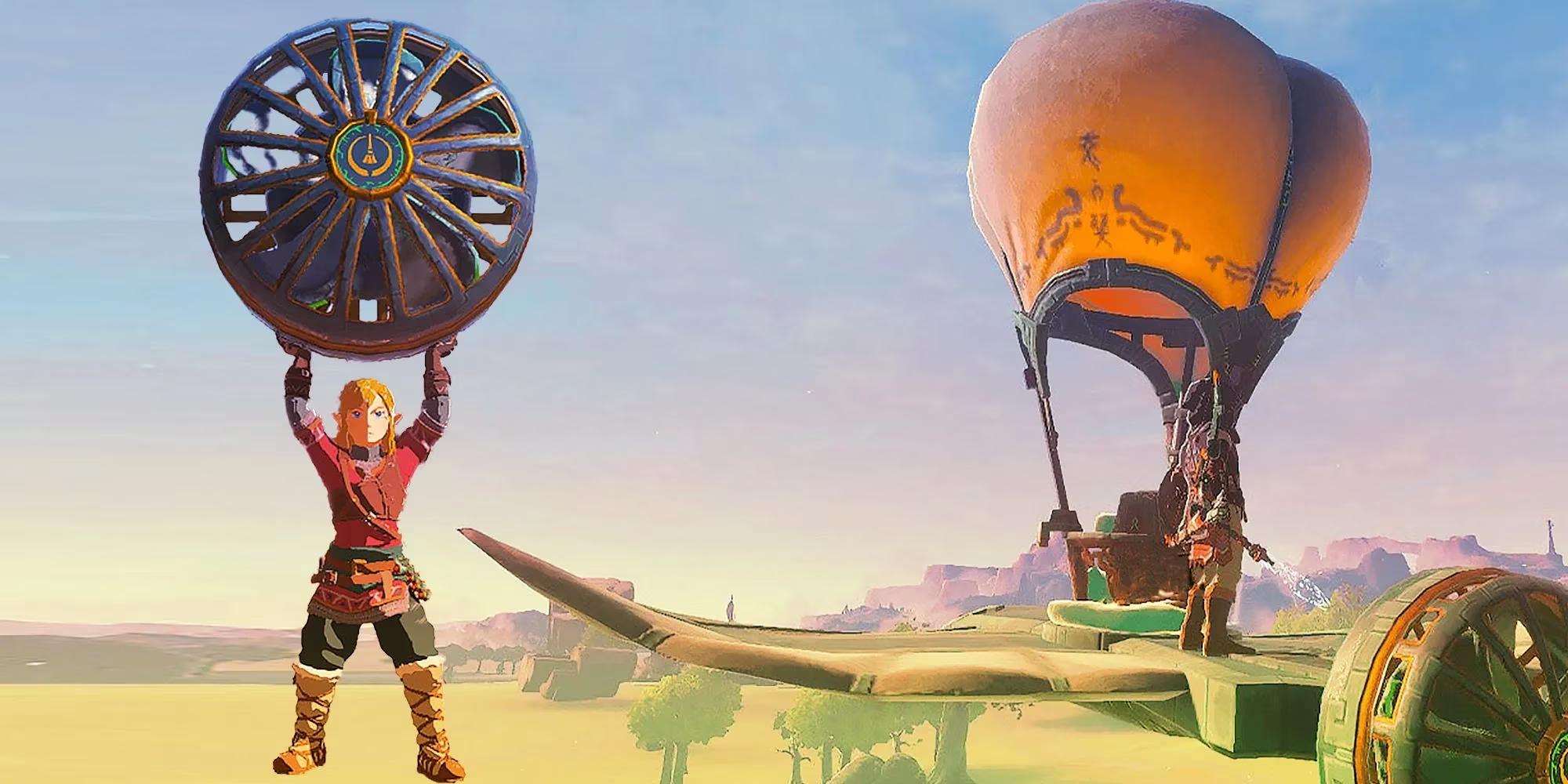
From my 2026 perspective, the HDPD matters because Tears of the Kingdom is no longer the newest headline in the series, yet its engineering culture remains alive in archives, videos, and shared discoveries. I still see builders cite these detachable parts as proof that Hyrule is deeper than its intended systems. Nintendo did not design these components for players to carry away, and that is the point. The HDPD’s work changes the scope of the game for anyone who follows it. It turns locations into quarries and puzzles into engineering challenges. I do not think every player needs to hunt impossible parts, but I am glad someone is doing it. The HDPD is destroying Hyrule piece by piece, and for the greater good of the people, it is making the game bigger in the process.
Recent trends are highlighted by GamesRadar+, whose reporting on inventive Zelda sandbox play helps frame why communities like the HDPD remain compelling long after launch: the fascination is not just with solving authored challenges, but with discovering how physics systems, object rules, and unintended interactions can transform fixed world geometry into new tools for experimentation.
Discussion