The Art of Rebirth: A Gamer's Reflection on Remakes in 2026
As I sit here in 2026, my fingers tracing the familiar yet unfamiliar contours of a reimagined world, I am struck by the delicate alchemy of the video game remake. It is not merely a coat of fresh paint on a fading mural; it is the careful excavation of a time capsule, the gentle breathing of new life into cherished memories. The task is unenviable, a tightrope walk between reverence and revolution. We, the players, are a demanding audience—we yearn for the ghost of that first, electric thrill, yet we crave the polish and possibility that only a new dawn can bring. A successful remake is a conversation across decades, a bridge built from the old stones of nostalgia and the new steel of innovation. It must honor the soul while letting the body dance to a modern rhythm.
🎭 The Alchemy of Memory and Modernity
What makes a game worthy of such a rebirth? It cannot be a simple facelift, a remaster that merely sharpens pixels while leaving creaking gameplay mechanics untouched. No, a true remake is a phoenix, rising from its own ashes with renewed purpose. It is an opportunity for developers to become archaeologists of their own past, sifting through the original vision to find the gems worth polishing and the ideas ripe for reimagining. The magic lies in its dual appeal: it is a siren's call to veterans like myself, offering a portal back to our younger selves, and a gleaming beacon for new adventurers, unburdened by nostalgia but eager for a classic tale told with contemporary flair. When the stars align, such a creation transcends its origins, becoming a contender in its own right, a testament to timeless design.
🌌 Ten Vessels Awaiting New Life
10. Dead Space 2: The Perfect Symphony of Sci-Fi and Dread
The 2023 remake of Dead Space was a revelation, a masterclass in how to amplify horror without losing the original's suffocating intimacy. Stomping through those claustrophobic hallways, the plasma cutter's glow a fragile shield against the darkness, was like hearing a beloved symphony performed by a full, modern orchestra—every note familiar, yet richer, more terrifying. If the first game was a meticulously restored vintage horror film, its sequel, Dead Space 2, is the big-budget, heart-pounding thriller that followed. It leaned into explosive action, its gunplay a frantic, cathartic release. A remake now feels like an inevitable and glorious next movement. EA crafted a brilliant blueprint; applying that same loving, brutal precision to Isaac Clarke's second nightmare could turn a fan-favorite into a genre-defining event once more. Imagine the Ishimura's sister ships, not just as rusty corridors, but as a gothic cathedral of flesh and steel, its horrors rendered in chilling, current-generation detail.
9. Red Dead Redemption: An Outlaw's Ghost, Reanimated
John Marston's journey is etched into my soul—a tragedy written in dust and blood under the vast western sky. The original was a masterpiece, but Red Dead Redemption 2 rewrote the language of open worlds. To remake the first game now would be to let John ride again, but through a world that breathes, decays, and lives with the hyper-realistic fidelity of its prequel. We could hunt and gather with purpose, feel the weight of every decision in a living ecosystem. More profoundly, we would meet Bill, Javier, and Dutch not as distant targets, but as the haunted men we came to know in the sequel, adding layers of tragic depth to John's grim mission. It would be the ultimate narrative closure, a chance to experience a classic story through the poignant, knowing lens of what came after.
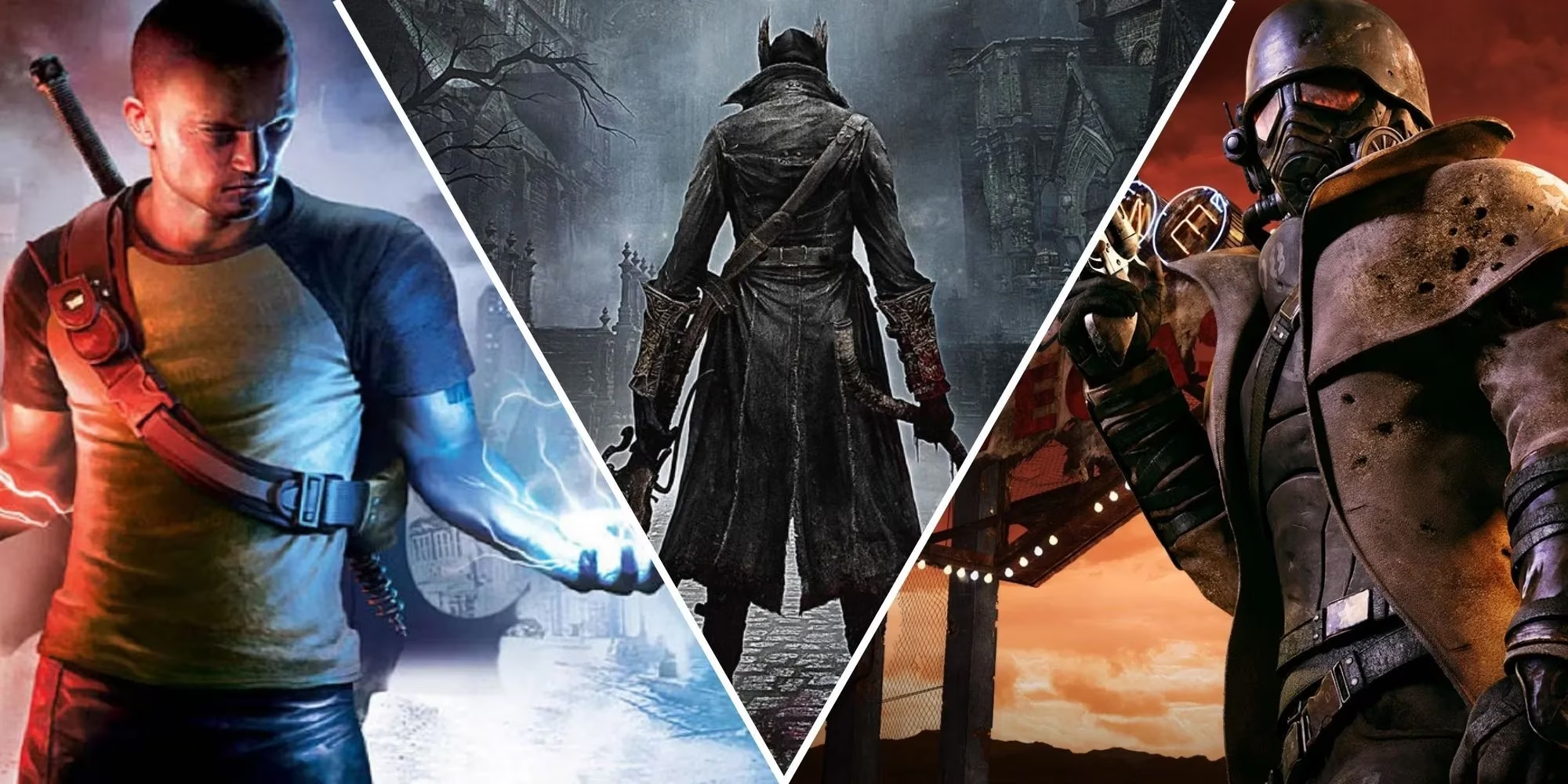
8. Infamous: A Static Charge Waiting to Ignite
Cole MacGrath's empire of lightning was my first real taste of moral choice in a superhero skin. The thrill of carving a path as a savior or a tyrant through Empire City felt revolutionary. But since then, heroes have learned to swing and glide with impossible grace. A remake of inFAMOUS could supercharge that raw, electric potential. Traversal could become a kinetic ballet of power lines and rooftop dashes, turning the city into a playground of pure voltage. Combat could be a dazzling storm of particle effects and reflexive strikes. In an era defined by polished superheroics, returning to this grittier, more personal origin story—and turbocharging its every mechanic—could be like finding the raw, untamed root of a now-cultivated species.
7. Persona 4 Golden: A Journey Back Into the TV Static
There is a peculiar, comforting magic to the foggy streets of Inaba and the surreal Midnight Channel. Persona 4 Golden is, for many, the series' warm, beating heart. After the stylish revolution of Persona 5 Royal and the beautiful refinement of Persona 3 Reload, the call for a full remake of P4G is a chorus. The improvements are clear: a complete visual overhaul in a modern engine, fully voiced social links that let me hear every nuance of the Investigation Team's bond, and combat that flows with the fluidity of its successors. It's more than an update; it's a chance to deepen the bonds with characters like Kanji and Naoto, to make the fog not just a plot device, but a tangible, velvet shroud over the town, enhancing the game's unique blend of small-town mystery and existential dread.
6. Fallout: New Vegas: The Wasteland's Unfinished Symphony
To this day, the mention of New Vegas sends a shiver down my spine—a memory of freedom, of stories woven into the very fabric of the desert. It set a bar for player agency and writing that remains untouched. A remake in 2026 isn't about fixing a broken game; it's about building a monument. Imagine the Strip not as a collection of discrete cells, but a seamless, neon-drenched spectacle. Picture incorporating the settlement-building depth of Fallout 4 into the Mojave, letting us truly leave our mark on the factions we champion. With modern graphics and stable performance, the Courier's tale could be told without the jank that was once part of its charm, allowing its brilliant writing and world-building to shine like a pristine, post-apocalyptic diamond.
5. The Elder Scrolls III: Morrowind: A Dream of Fungal Towers and Alien Skies
Morrowind was not a game; it was a living, breathing alien dream. It rejected Tolkien-esque fantasy for something truly bizarre and beautiful. A remake is the dream of every adventurer who got lost in its ash storms. Modern graphics could finally do justice to the fungal towers of Telvanni, the floating rocks of Vivec, and the haunting beauty of the Ashlands. More than visuals, Bethesda's decades of RPG evolution could be poured into its systems—making combat more engaging, magic more wondrous, and the world even more responsive to our actions. To walk from Seyda Neen to Red Mountain again, not with the eyes of memory, but with the awe of first discovery in a fully realized world, would be a privilege.
4. Dragon Age: Origins: Where Epic Fantasy Was Forged
This was the game that made me feel like the author of my own dark fantasy novel. The origins stories, the weight of the Grey Warden's sacrifice, the tactical depth of combat—it's a pinnacle. A remake could elevate it from a classic to a contemporary titan. Giving my Warden a voice would forge a deeper connection to their struggle. Expanding the zones beyond their sometimes-constricted maps would make Ferelden feel truly vast and explorable. And refining the combat to be more visceral and seamless, while keeping its strategic heart, would make every encounter with the Darkspawn a desperate, thrilling struggle for survival.
3. Star Wars: Knights of the Old Republic: A Jedi's Path, Reforged
KOTOR isn't just a great Star Wars story; it's one of the great narratives in gaming. Its characters, its twist, its sense of scale are legendary. A remake here is the most delicate operation of all—how do you modernize a sacred text? The answer may lie in the Final Fantasy VII Remake project: honor the turn-based, tactical soul while letting the action flow in real-time. Imagine lightsaber duels that feel as weighty and personal as the dialogue choices. The infamous turret sequences could be transformed into thrilling set-pieces. And to hear Revan's story fully voiced, with modern performances capturing the nuance of light and dark, would be a gift to a new generation of fans.
2. Chrono Trigger: A Timeless Classic, Awaiting its Moment
Some art is eternal. Chrono Trigger's tale of friendship and time travel, adorned with Akira Toriyama's iconic art, is one such masterpiece. It doesn't need to be "fixed." It needs to be celebrated. The HD-2D style, as seen in games like Octopath Traveler, feels like it was invented for this very purpose. It would preserve the soulful sprite work while bathing it in modern lighting, particle effects, and depth. This visual treatment, coupled with a definitive, polished translation and score, would be the ultimate act of preservation—a way to ensure this timeless journey shines brightly for another thirty years.
1. Bloodborne: The Gothic Dream, Unshackled
And then there is Yharnam. FromSoftware's gothic masterpiece is a symphony of madness carved from stone and blood, an experience that has only grown in stature. The plea for a remake is a chorus of hunter's bells. It's not just about escaping the 30 FPS cap, though the thought of a fluid, relentless dance with Father Gascoigne is intoxicating. It's about letting the nightmare breathe on modern hardware. Imagine the crumbling spires of Cathedral Ward under ray-traced moonlight, the wet, glistening textures of the beasts in 4K, the soundtrack swelling without a hitch. A remake, especially by masters like Bluepoint, would not alter the perfect, brutal poetry of its combat or the labyrinthine genius of its world. It would simply remove the veil, allowing us to behold the terrifying beauty of the dream in its full, unfettered glory.
🔮 The Future Carved from the Past
As I look at this list, I see not just games, but portals. Each one represents a chance to reunite with an old friend who has new stories to tell. The art of the remake, in 2026, is clearer than ever. It is not nostalgia-bait; it is cultural preservation through reinvention. It is the acknowledgment that great stories deserve to be told again, with all the tools and wisdom we have gained. These potential remakes are love letters to our shared history, promising that the adventures that shaped us need not fade, but can evolve, inviting us to fall in love with them all over again, side-by-side with those discovering their magic for the very first time. The hunt, the journey, the choice—it all awaits a new dawn.
Discussion