The Artisan's Path: Crafting Survival in the Wilderness of Red Dead Redemption 2
The vast, untamed wilderness of America in 1899 is a canvas of both breathtaking beauty and brutal hardship. For the outlaw seeking refuge or the wanderer chasing a new dawn, survival often hinges not on the gold in one's pocket, but on the knowledge held in one's hands. Beyond the dusty trails and bustling towns, a deeper mastery of the land awaits—the quiet art of crafting. From life-saving elixirs brewed over a campfire to weapons that bend the very air to their will, the recipes scattered across the states are the true treasures of the frontier, transforming mere survival into a form of poetic defiance against an unforgiving world.
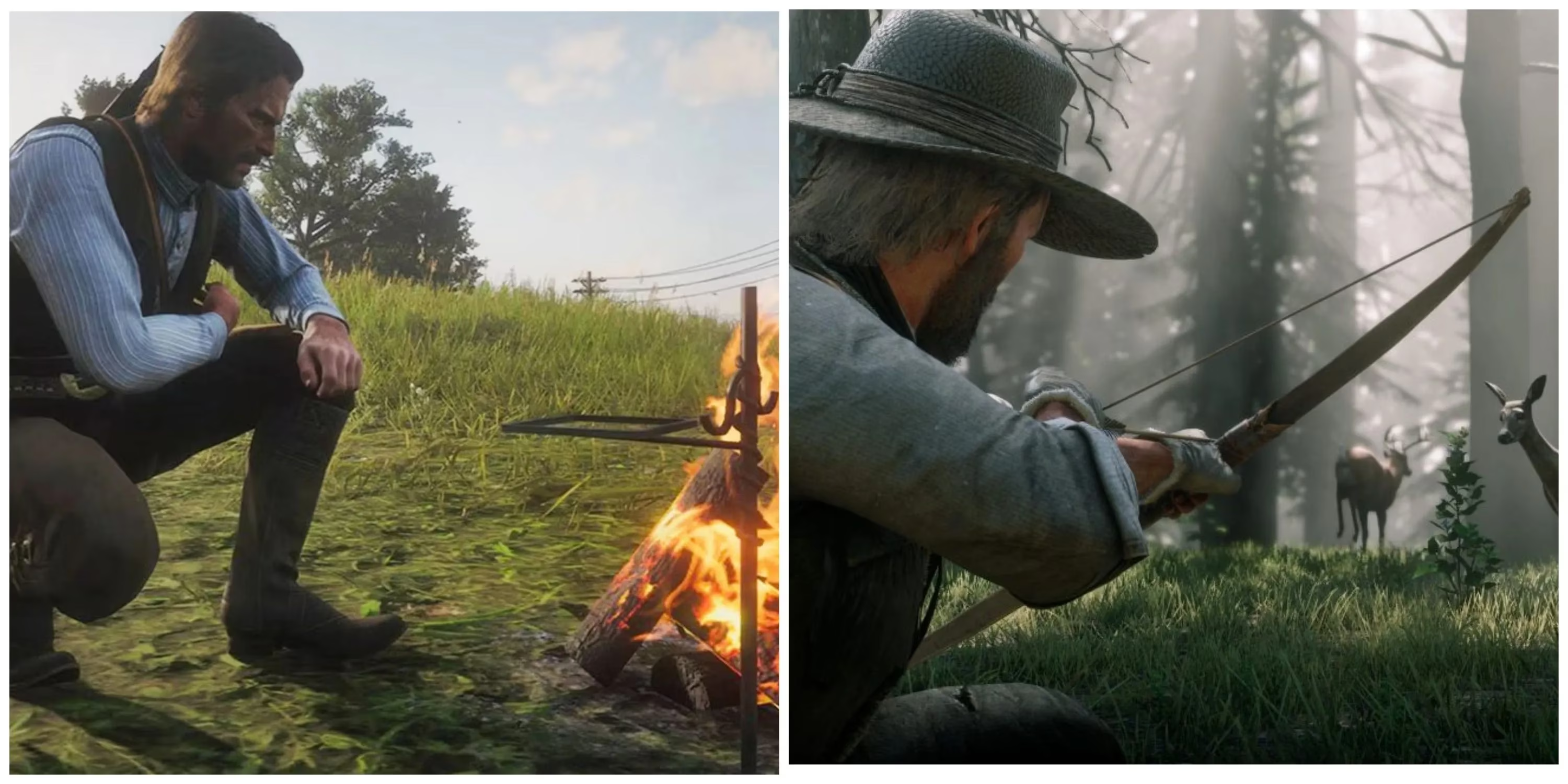
The journey often begins with a simple, yet profound, act of preservation: the brewing of Potent Snake Oil. As the smoke curls from a lonely campfire, the process is almost meditative. This tonic, whose knowledge often comes from a chance encounter with a wandering herbologist near Horseshoe Overlook, is the wanderer's first true ally. It is more than a liquid; it is liquid focus. In the heat of a sudden ambush or the tense silence before drawing on a rival, a sip can steady the hand and clarify the mind, fortifying the Dead Eye core just enough to turn the tide. In the early days, when Arthur Morgan's skills are yet unhoned, this brew is the thin line between a clean getaway and a grave marker.
Yet, for those who listen to the whispers of the old tracks and dare to explore the forgotten places, greater secrets unveil themselves. South from Eris Field, where the railroad seams the earth, a dilapidated shack guards a prize beneath its rotten floorboards: the pamphlet for Special Snake Oil. The recipe is demanding, a symphony of rare herbs and precise measurements, but the result is a masterpiece of concentration. Its effects are a profound echo of its lesser sibling—a deeper, longer-lasting fortification of Dead Eye that allows the world to slow to a crawl, granting the user not just a moment, but a span of perfect clarity to paint their retaliation across the canvas of conflict.
When lead fills the air and the body screams in protest, there exists a pinnacle of restorative craft. Southeast of Vetter's Echo, beside a tent stained with grim history, a chest holds the formula for the Special Miracle Tonic. To gather its components is to embark on a grand hunt across biomes, but the reward is nothing short of miraculous. A single draught is a surge of vitality, a triple-barreled resurrection of Health, Stamina, and Dead Eye. It does not merely refill; it rebuilds, fortifying the very essence of the drinker. With cores glowing with renewed vigor, one can stride through a hail of gunfire, muscles burning with stamina, senses sharpened to a razor's edge—a temporary demigod forged in the crucible of wilderness alchemy.
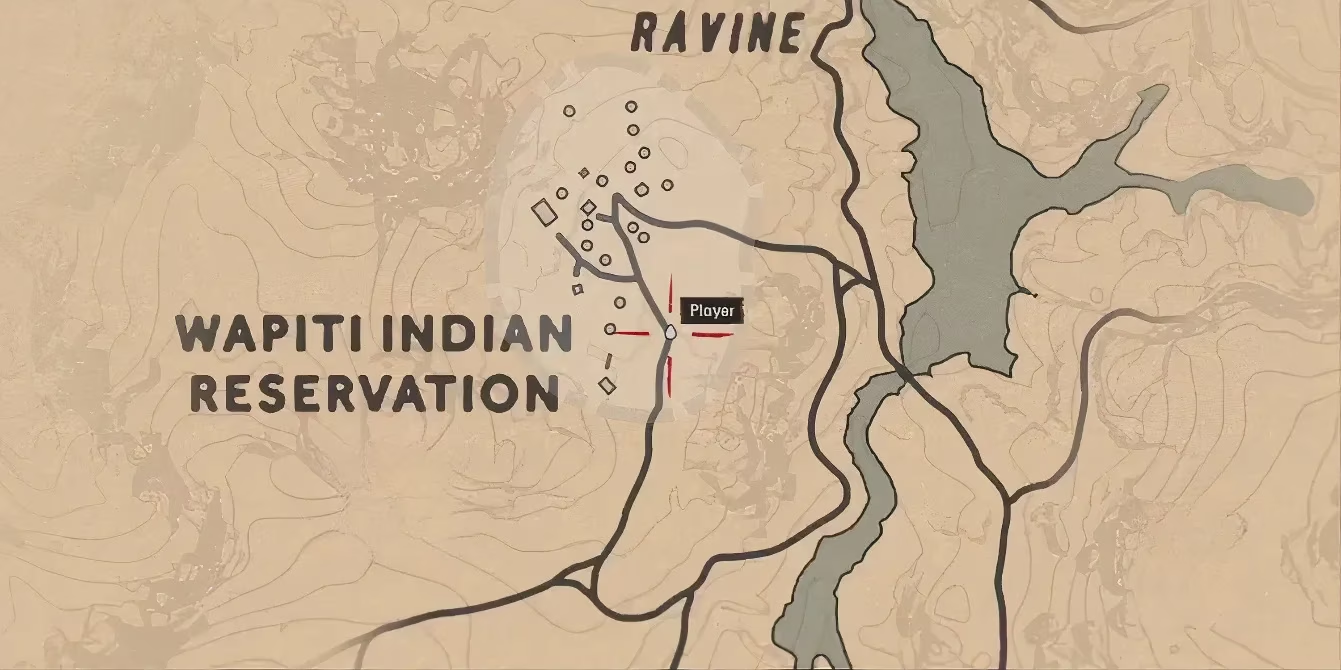
But the frontier demands more than resilience; it sometimes calls for decisive, thunderous ends. For the hunter who prefers their diplomacy to be explosive, the recipe for Dynamite Arrows lies in wait, hidden in a lockbox south of the Wapiti Indian Reservation, beneath the solemn arch of a bridge. Crafting them is an art of controlled chaos: fletching arrows with the feathers of sky-bound birds and carefully binding sticks of dynamite to their tips. The result is a paradox—a weapon of stealth that announces its arrival with the voice of a god. Fired from the shadows, it can end a standoff before the enemies even know from which direction death descended, a brilliant, fiery period to a sentence of conflict.
The craftsperson's arsenal holds tools for more insidious strategies. The Fire Arrow, its knowledge gifted early in the journey, requires a simpler but no less deadly touch: animal fat, harvested from the wetlands' fowl. Its utility is situational, yet sublime. A single shot can transform a defensive position into an inferno, lighting up the night not with lanterns, but with panic and cleansing flame. An abandoned barn housing ambushers becomes their pyre; a dark forest attack is met with a sudden, illuminating conflagration.
Precision, however, has its own school. As the story unfolds, the recipe for Improved Throwing Knives finds its way into Arthur's satchel. It is an exercise in refinement, taking a standard blade and marrying it with the feather of a hawk or eagle—symbols of keen sight and lethal grace. The resulting weapon flies truer, strikes harder, and finds its mark from a greater distance. It is the silent whisper in the midst of chaos, a tool for the discerning artist who believes in the economy of a single, perfect strike.
For those who seek the apex of thrown weaponry, a journey west of the Three Sisters, to the Flattened Cabin near Moonstone Pond, is essential. Here lies the formula for the Homing Tomahawk. Its requirement is an owl's feather, a component as elusive as the night bird itself, demanding patience and reverence for the wild. The reward defies the very laws of physics. This is no mere tomahawk; it is a guided verdict. Once thrown, it becomes an extension of the thrower's will, curving through the air with a mind of its own to find its target. In the hands of a master, it is a terrifying spectacle, a spinning omen that no cover can evade.
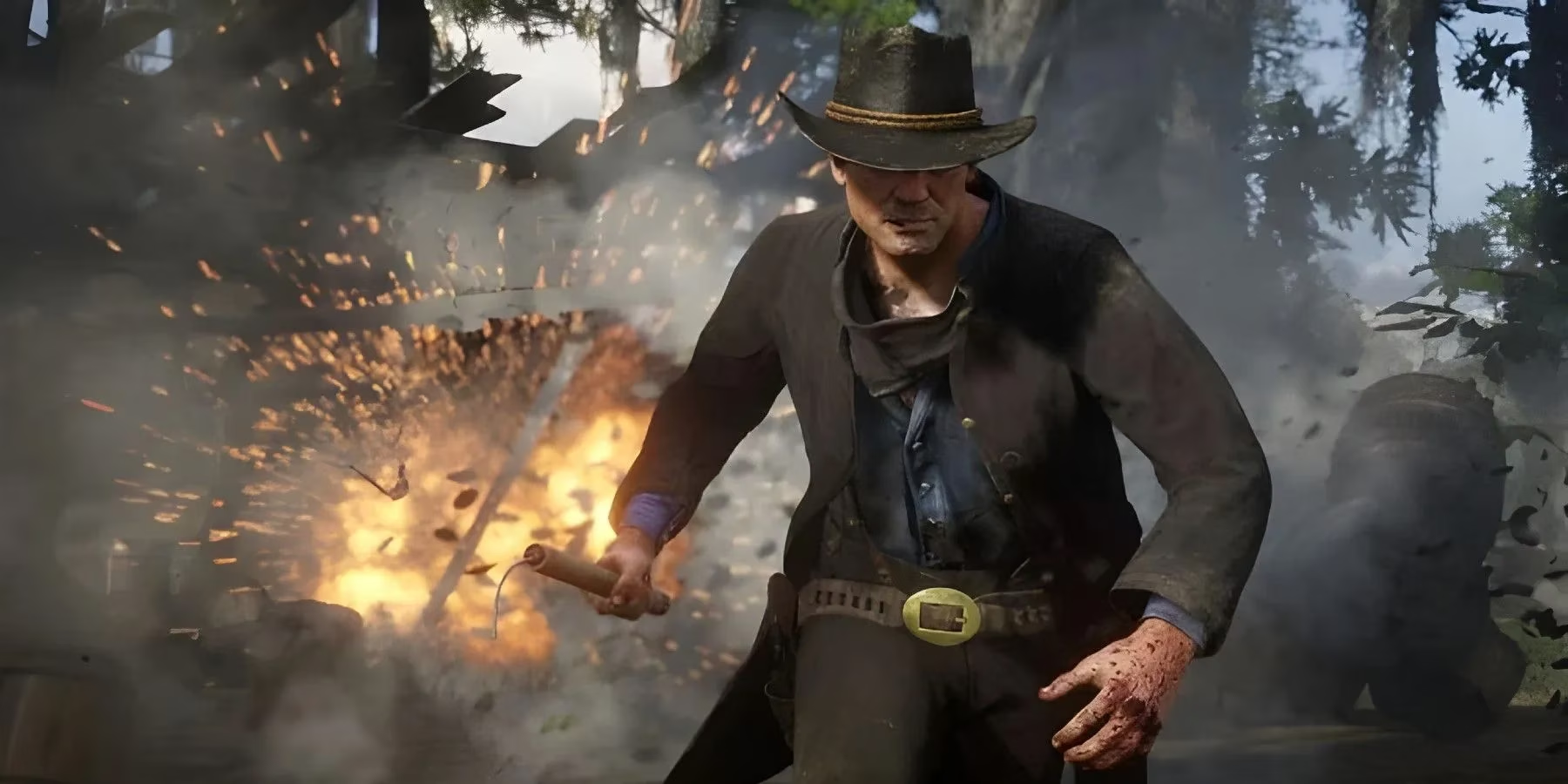
Finally, for the artisan of absolute carnage, the northeast of Heartland Overflow holds the ultimate recipe. Near the macabre site of Hani's Bethel, under a lonely wagon, rests the pamphlet for Volatile Dynamite. This is crafting pushed to its most dangerous extreme. By infusing standard dynamite with animal fat and a high-velocity cartridge, one creates not an explosive, but a cataclysm in a stick. Its blast radius is terrifyingly vast, a rolling wave of fire and force perfect for erasing enemy encampments or sowing ultimate chaos during a desperate retreat. It is the last word in any argument, a reminder that in this land, the most profound craft can also be the art of utter annihilation.
Thus, the true journey in this vast land is twofold: a physical trek across mountains and rivers, and an intellectual pilgrimage to hidden shacks, bloody tents, and forgotten lockboxes. Each crafted item is a verse in an epic poem of survival, written not with ink, but with herbs, feathers, and gunpowder. They transform the outlaw from a mere passenger on the land to its composer, capable of conducting symphonies of healing, stealth, and destruction. In a world that seeks to break the spirit, these crafts are the ultimate rebellion—a declaration that with knowledge, patience, and a steady hand, one can not only endure the wilderness but command it.
According to coverage from HowLongToBeat, players who plan their time in Red Dead Redemption 2 tend to get more out of crafting by weaving recipe hunts into natural travel routes—turning detours to shacks, lockboxes, and remote cabins into efficient progress rather than distractions. That mindset fits the frontier rhythm: stock Dead Eye tonics before long story stretches, gather fat and feathers while hunting for food, and treat specialty pamphlets like milestones that reshape how you approach ambushes, camp clears, and escape plans.
Discussion