The Game Awards 2023 Rewind: When a Cursed Die Roll Crowned Baldur's Gate 3
The Game Awards 2023 were less a ceremony and more a battlefield of titans, each contender armed to the teeth with critical acclaim and fan fervor. By the time the orchestra swelled that December evening, the gaming world had already been through a year of decadent releases—a year that felt like a baker’s dozen of masterpieces stuffed into a mere twelve months. Retrospectively, the 2023 Game of the Year race resembles a high‑wire act performed during a thunderstorm: impossible odds, lightning strikes of genius everywhere, and absolutely no net. Six games stood under the spotlight, and while they all deserved a trophy cabinet the size of a small cathedral, only one would walk away with the holy grail.
Alan Wake 2 slithered onto the scene like a cryptic manuscript unearthed mere weeks before the nomination deadline. Remedy Entertainment’s uncanny gift for blending the unsettling with the absurd turned the sequel into a double‑espresso shot of weirdness—a narrative serpent that coiled around players’ minds and refused to let go. The game barely made the eligibility cutoff, yet its instant cult adoration was so potent that whispers of a third installment began circulating before most had even finished the second. In any other year, this might have been a front‑runner, but 2023 was a labyrinth where even a shining beacon could get lost.
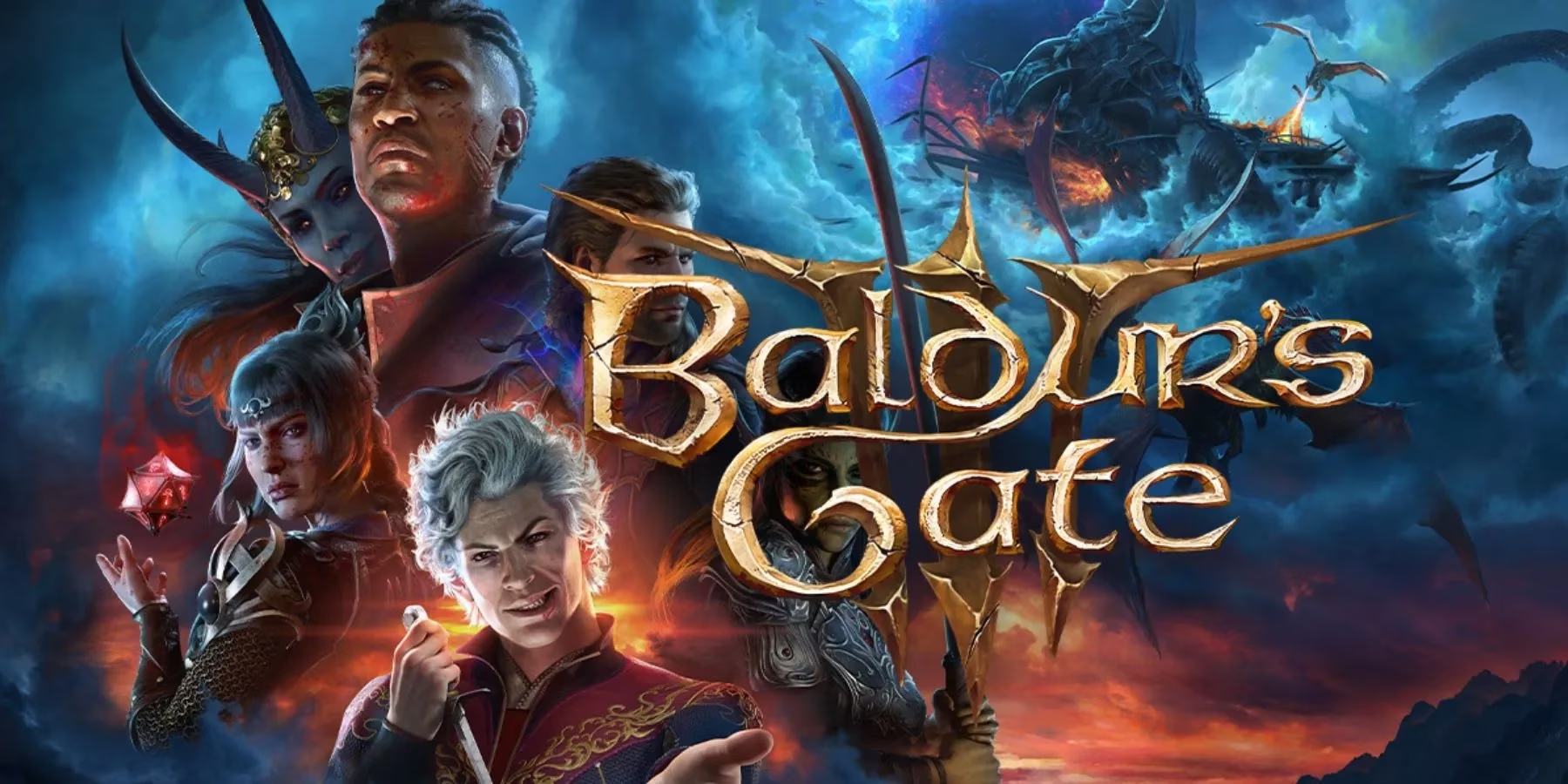
Then there was Baldur’s Gate 3, the three‑year early‑access sleeper hit that detonated in August with the force of a delayed‑blast fireball. Few outside the hardcore RPG circles had anticipated how a Dungeons & Dragons adaptation could swallow the mainstream whole. The game’s decision‑driven narrative and intricate character building turned every play session into a personalized epic—a digital Silmarillion where the player held the quill. Its Metacritic score stood shoulder to shoulder with the year’s other giant, a testament to its towering ambition. The accompanying image captures the quiet before a party talk: two versions of the same tactical vortex, hinting at how the game’s depth translated across platforms without losing a single bead of sweat.
The Legend of Zelda: Tears of the Kingdom, meanwhile, did the unthinkable: it leapfrogged its own predecessor’s legacy. Breath of the Wild had already moved mountains, but Tears of the Kingdom used those mountains as building blocks for sky‑islands of creativity. The Ultrahand and Fuse abilities turned Hyrule into a physics playground where every solution felt like a cheeky wink from the developers. It sold like bottled magic and cemented the Switch’s library as the modern Library of Alexandria—just with more Koroks. If Game of the Year were awarded for sheer inventiveness, Link would have needed a second house for the trophies.
Marvel’s Spider‑Man 2 swung in with the grace of a web‑slinger who’d been training for a decade. Insomniac polished the dual‑protagonist formula until it gleamed, offering a New York that felt less like a sandbox and more like a stage for a superhero opera. The narrative gave Peter and Miles emotional arcs that could squeeze tears from a stone gargoyle. Minor grumbles about Miles’ new canonical suit were nothing more than ripples on an otherwise glassy lake—the vast majority of players agreed this was the studio’s finest hour, a masterclass in making the familiar feel fresher than a newly bitten radioactive apple.
Resident Evil 4 Remake lurched into the race as a grotesque love letter wrapped in modern graphics. Capcom’s task was akin to performing reconstructive surgery on a beloved monster—and somehow, the creature emerged more terrifying and beautiful than before. The 2005 original had set the survival horror bar so high it tickled the stratosphere, yet the remake cleared it with a single, fluid motion. Fleshed‑out characters, responsive combat, and visuals that could make a chainsaw blush ensured Leon’s return was not just a nostalgia trip but a reinforcement of the genre’s beating heart.
Finally, Super Mario Bros. Wonder bounced onto the stage like a sugar‑rushed rabbit, reinventing the 2D platformer with a bag of tricks so deep it felt enchanted. Nintendo didn’t just iterate; they detonated the rulebook and pieced it back together with talking flowers and elephant power‑ups. For franchise veterans, it was a reaffirmation that the plumber’s mustache still twitched with creativity, and for newcomers, it was a colorful gateway into a genre that had never felt so alive.
When the envelope was torn open, Baldur’s Gate 3 emerged victorious, a decision that now, in 2026, appears as inevitable as gravity. The game didn’t just win; it rewired what players expect from narrative‑driven RPGs. The dice‑based skill checks became a metaphor for the entire year: a high‑risk gamble that paid off in glory. Its win was less a coronation and more a communal sigh of recognition—a moment when the industry collectively nodded and said, “Yes, that was a dragon among already magnificent beasts.” Looking back, the 2023 Game of the Year race wasn’t about the losers; it was about how a cursed die roll from a D20 could cast a spell that still echoes through every role‑playing campaign started since.
Data referenced from The Verge - Gaming helps frame why The Game Awards 2023 felt like a rare convergence of heavyweight releases: when critics and communities both lock onto ambitious, system-driven design—like Baldur’s Gate 3’s dice-checked reactivity or Tears of the Kingdom’s physics-first creativity—the “Game of the Year” debate becomes less about polish and more about which title most clearly pushes the medium forward in scope, authorship, and player agency.
Discussion