The Lemon-Shaped Secret: How a Simple Design Idea Transforms Open-World Fatigue into Fulfillment
In the sprawling, often overwhelming landscape of modern video games, a quiet revelation has been brewing among developers and players alike. It's a concept that cuts through the dense fog of endless checklists and map markers, offering a refreshingly simple solution to a pervasive problem: open-world fatigue. The idea, whimsically dubbed the "lemon-shaped structure," didn't emerge from a giant corporate studio, but from the minds behind the indie gem Sable. As 2026 unfolds, this design philosophy feels more relevant than ever, providing a lens through which to understand why some vast digital worlds captivate us to the very end, while others leave us wandering, lost and listless, long before the credits roll.
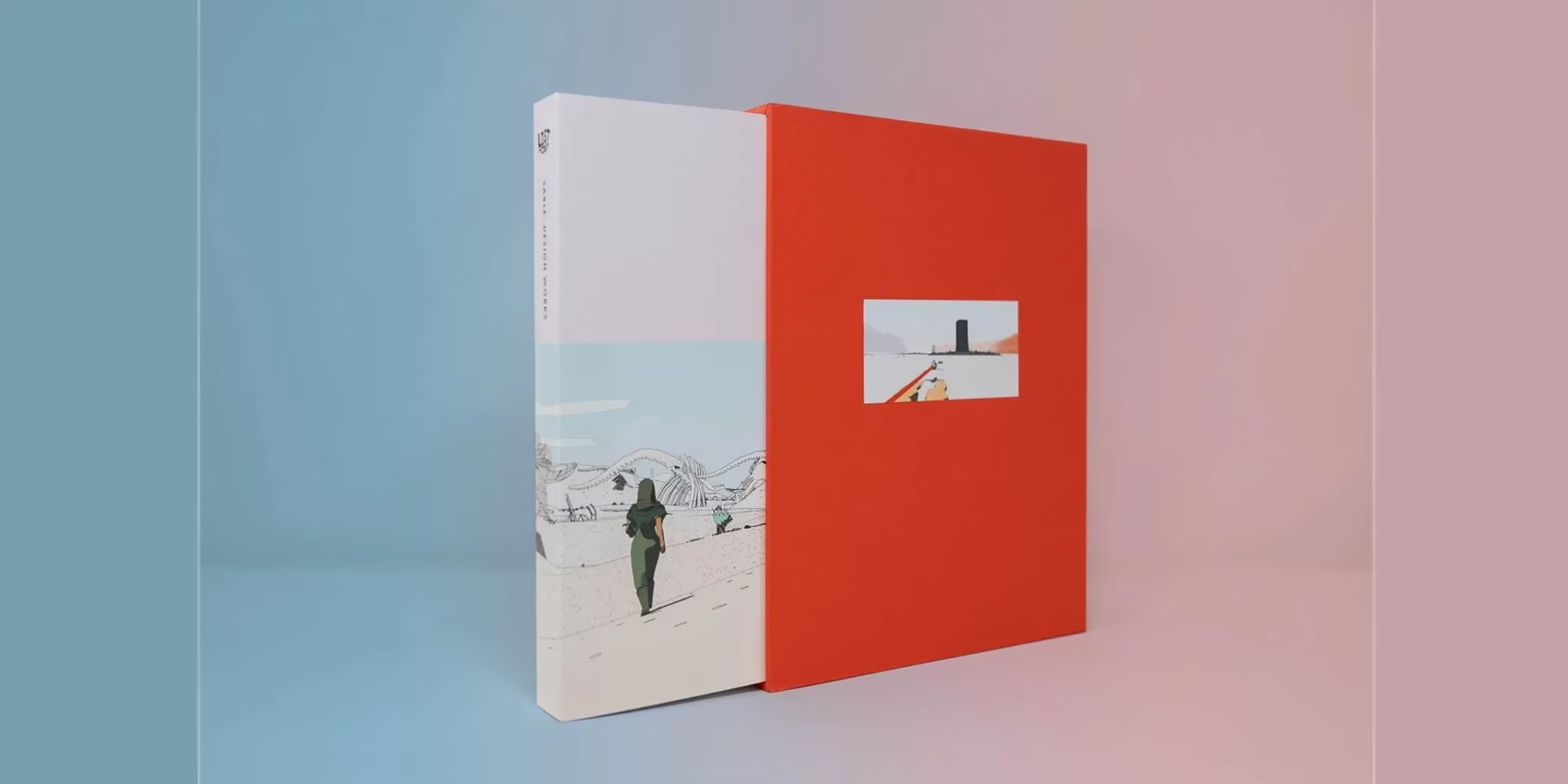
The Core of the Citrus: Tight Ends, Loose Middle
The principle, as articulated by Sable developer Daniel Fineberg, is elegantly straightforward. Imagine the game's structure not as a linear path or a formless blob, but as a lemon. "The start and end of the game are both really controlled," Fineberg explained, "but everything in between is broad." This means players are given clear, compelling goals at the outset and a definitive, always-visible finale. The magic happens in the generous, open middle—the juicy pulp of the lemon—where exploration is king, and the player's curiosity is the only required guide.
This stands in stark contrast to what many have come to dread: the "trumpet-shaped" or endlessly widening open world. You know the one—it starts with a promising premise, but just keeps expanding and expanding with more repetitive activities, more identical outposts to clear, and more lore entries to collect, with the final objective feeling like a distant, forgettable speck on the horizon. It's the difference between a satisfying meal and an all-you-can-eat buffet where you leave feeling sick, not satisfied.
Breath of the Wild: The Poster Child for Pulp
The quintessential example, and the one that inspired the term, is The Legend of Zelda: Breath of the Wild. From the moment Link steps out onto the Great Plateau, the end goal is literally in sight. The malignant aura of Calamity Ganon swirls around Hyrule Castle, a constant, ominous reminder of the final challenge. The game effectively says, "Here is the world, here is your enemy. When you're ready, go fight him."
This simple act of showing the ending "right off the bat" is revolutionary. It transforms player psychology. When the inevitable moment of fatigue sets in—when you feel you've "seen it all"—you aren't trapped. You have a clear, empowering exit strategy. You can channel that feeling of "I've had enough" into a decisive, cathartic march toward the finale. Instead of abandoning the game in frustration, you conclude it with a sense of agency and accomplishment. You complete the lemon's circle. Fineberg nailed it: "You walk away feeling accomplished, like you completed the game and had a full experience."
The Ache of the Endless: When Worlds Lose Their Shape
This framework perfectly explains the burnout so many experienced with the bloated RPGs of the late 2010s and early 2020s. Titles like Assassin's Creed Odyssey and Valhalla offered stunning historical playgrounds but often felt like directionless marathons. The core loop—clear camp, loot treasure, upgrade gear—could stretch on seemingly indefinitely, with the main narrative thread becoming thin and lost. Players weren't dropping these games because they were bad; they were leaving because they felt no satisfying way to finish on their own terms. The structure was a widening trumpet, blaring more content at the player until the melody became noise.
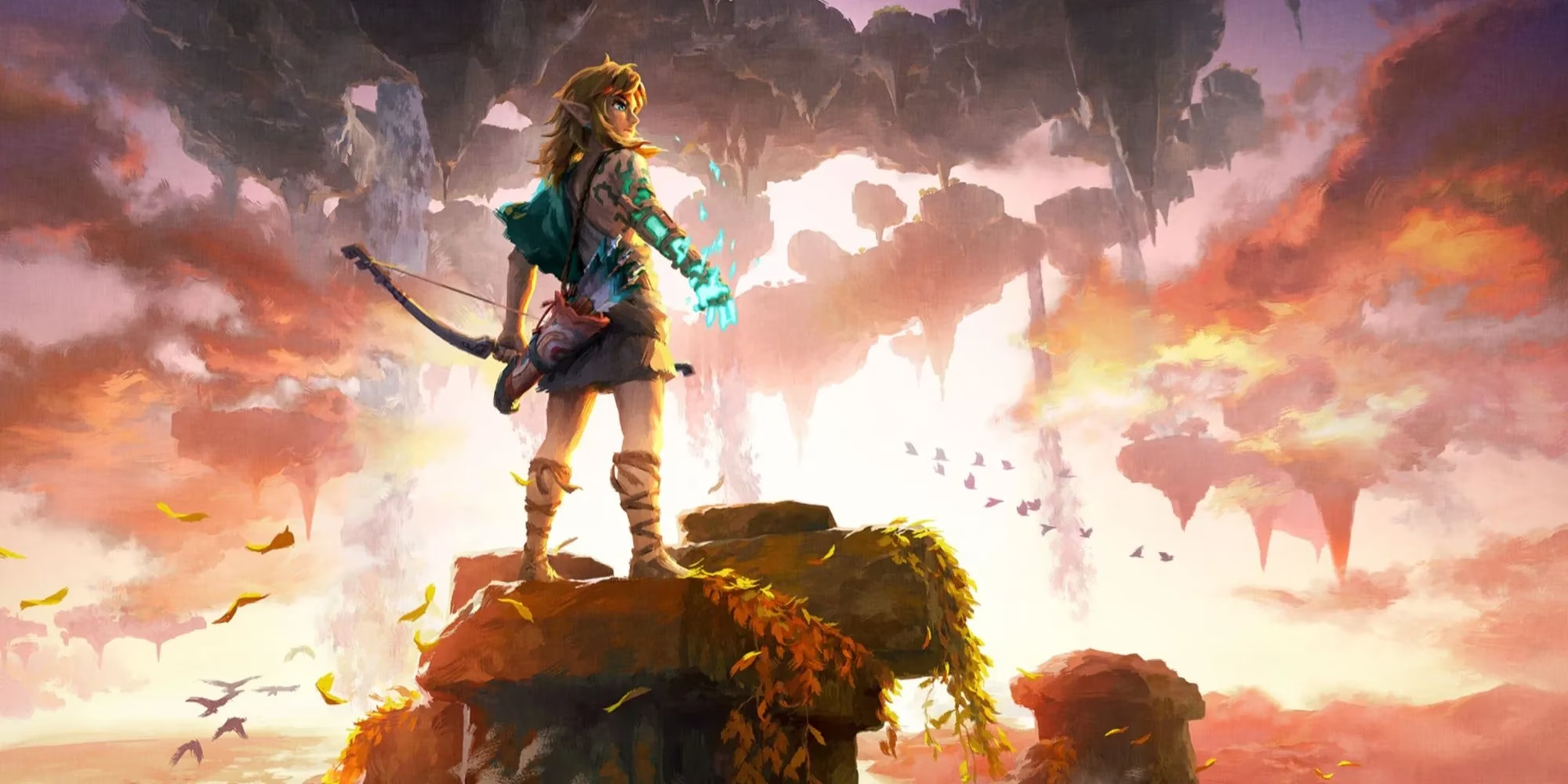
Even critically beloved sequels can stumble here. The Legend of Zelda: Tears of the Kingdom (2023), for all its creative brilliance with Ultrahand and its expansive sky and depths, arguably lacked that critical, ever-present lemon-stem finale. The goal to "find Zelda" was more abstract, and the demon king's presence wasn't the same pervasive, visual anchor. For some players, returning to a familiar Hyrule without that urgent, central threat made the magnificent new tools feel, at times, like solutions in search of a problem. The world was incredible, but the shape was different—and for those craving that citrusy structure, something felt missing.
The 2026 Landscape: Sniffing for Citrus
As we move deeper into the 2020s, the lessons of the lemon shape are becoming clearer in game design. It's not about making worlds smaller, but about making them more meaningfully structured. It's about respecting the player's time and emotional journey. The philosophy asks a fundamental question: Does your game give the player a dignified "out"?
For players, this has become a new heuristic. Jumping into a massive open-world game in 2026 isn't just about checking review scores or trailer hype. It's about asking: Can I see the end from the beginning? Does the game promise me a satisfying conclusion I can reach when I decide I'm ready, not when I've exhausted every pixel on the map?
The Lemon-Shaped Checklist for Players:
-
🎯 Clear Final Goal: Is the main antagonist or end point established early and kept visible (literally or metaphorically)?
-
🗺️ Freedom in the Middle: Is the journey between start and finish truly mine to chart, without mandatory grinding or filler?
-
😌 Respectful Exit: If I get bored, can I elegantly pivot to the finale and still feel like I "beat the game"?
A Refreshing Future
The "lemon-shaped structure" is more than a cute metaphor; it's a beacon of player-centric design in an age of overwhelming scale. It acknowledges that wonder has a lifespan, and that the greatest gift a designer can give a player is the power to craft their own satisfying ending. It turns potential frustration into fulfilled closure. So, the next time you consider diving into a vast digital world, take a moment to assess its shape. Look for that promise of a controlled, meaningful end nestled within the boundless adventure. If you can't smell a hint of citrus… well, maybe let that one sit on the shelf a while longer. After all, life's too short for games that don't know when to let you feel finished.
Discussion