TotK Shrine Secrets: From Spirit Orbs to Kyoto Landmarks
As a gamer who has spent over 300 hours galloping through Hyrule on a horse I named "Ganonfarter," I thought I had seen it all in The Legend of Zelda: Tears of the Kingdom. But here we are in 2026, and I still occasionally dive back into the Depths just to feel the existential dread of a Frox swallowing me whole. Recently, though, I stumbled upon an old interview with the game's director, Hidemaro Fujibayashi, and let me tell you – my brain did a backflip. The lore surrounding those 152 shrines Link solves like a stressed-out architect? It’s deeper than the chasm under Hyrule Castle, and possibly more insane than the Korok space program.
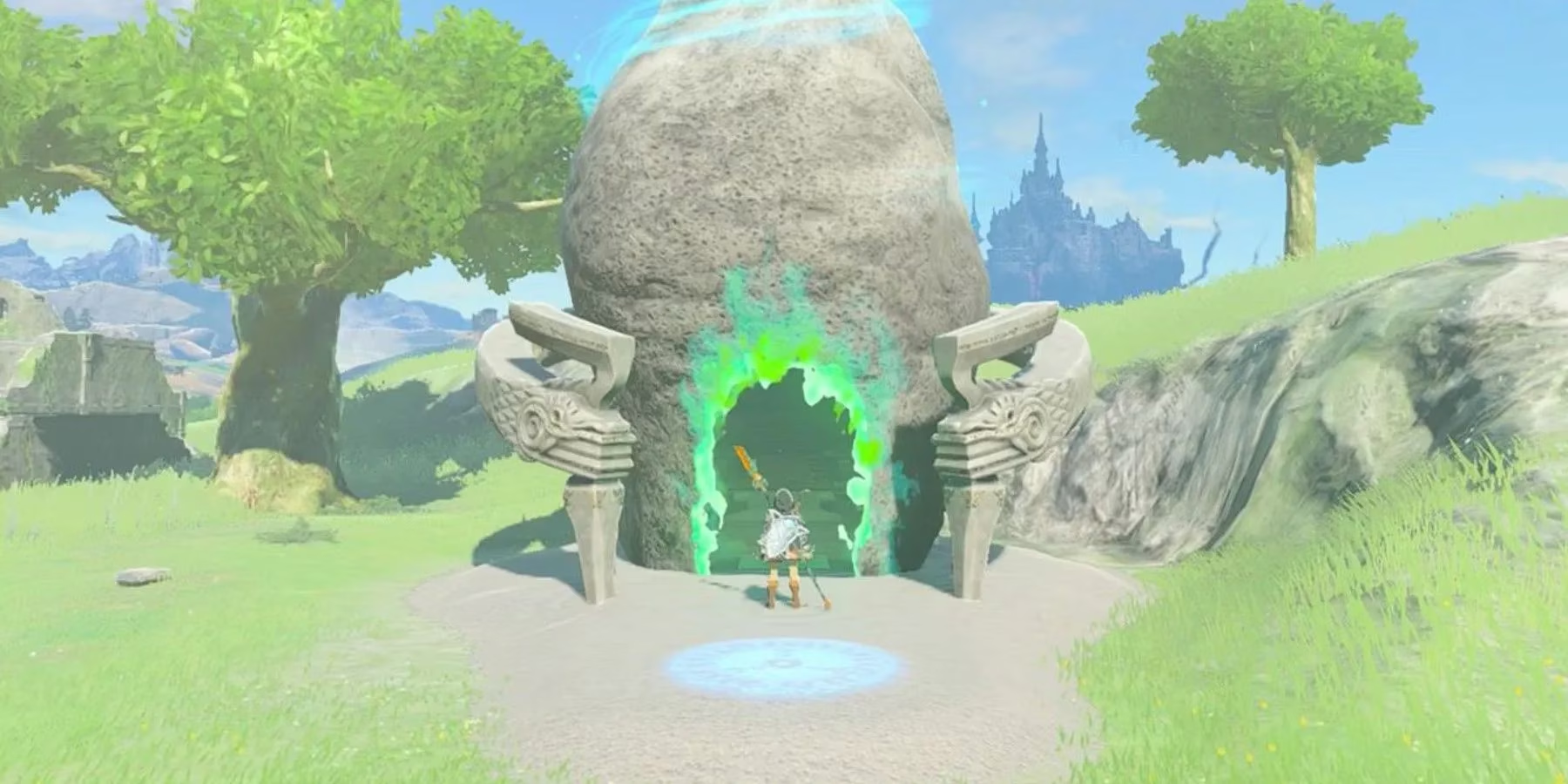
So Fujibayashi-sensei dropped some serious knowledge: "The shrines themselves were built before Rauru founded Hyrule – before the Demon King Ganondorf appeared there were still a lot of evil beings." Wait, what? Pre-Hyrule means pre- everything we know! Back then, ancient demons were apparently throwing block parties, and Rauru – ever the responsible Zonai – decided to clean house. He destroyed the evil entities, plonked down a shrine on each cursed spot, and essentially said, "That’ll teach you to haunt this exclusive real estate." This little nugget transformed every shrine in my mind from a mere puzzle box into a sacred demon jail. I suddenly felt far more heroic whenever I did that clumsy Ultrahand balancing act to get a chest with five arrows.
But here’s where it gets truly bonkers. Fujibayashi explained that those Spirit Orbs we collect aren’t just a reward – they’re Link’s personal darkness-cleansing therapy tokens. Each shrine’s challenge is specifically designed to purge the hero’s inner shadows, granting him light to face Ganondorf. Long-time series producer Eiji Aonuma chimed in, comparing the shrines to talismans or statues meant to ward off enemies – but the real enemy was apparently Link’s own repressed gloom. Honestly, it explains so much. All those "Rauru’s Blessings" with no puzzle? That was just the spiritual equivalent of an easy day in therapy where you just talk about your feelings and get a sticker. The complex Combat Training shrines? Those were intensive sessions where Link had to scream into a Guardian Scout’s shield and then beat it up.
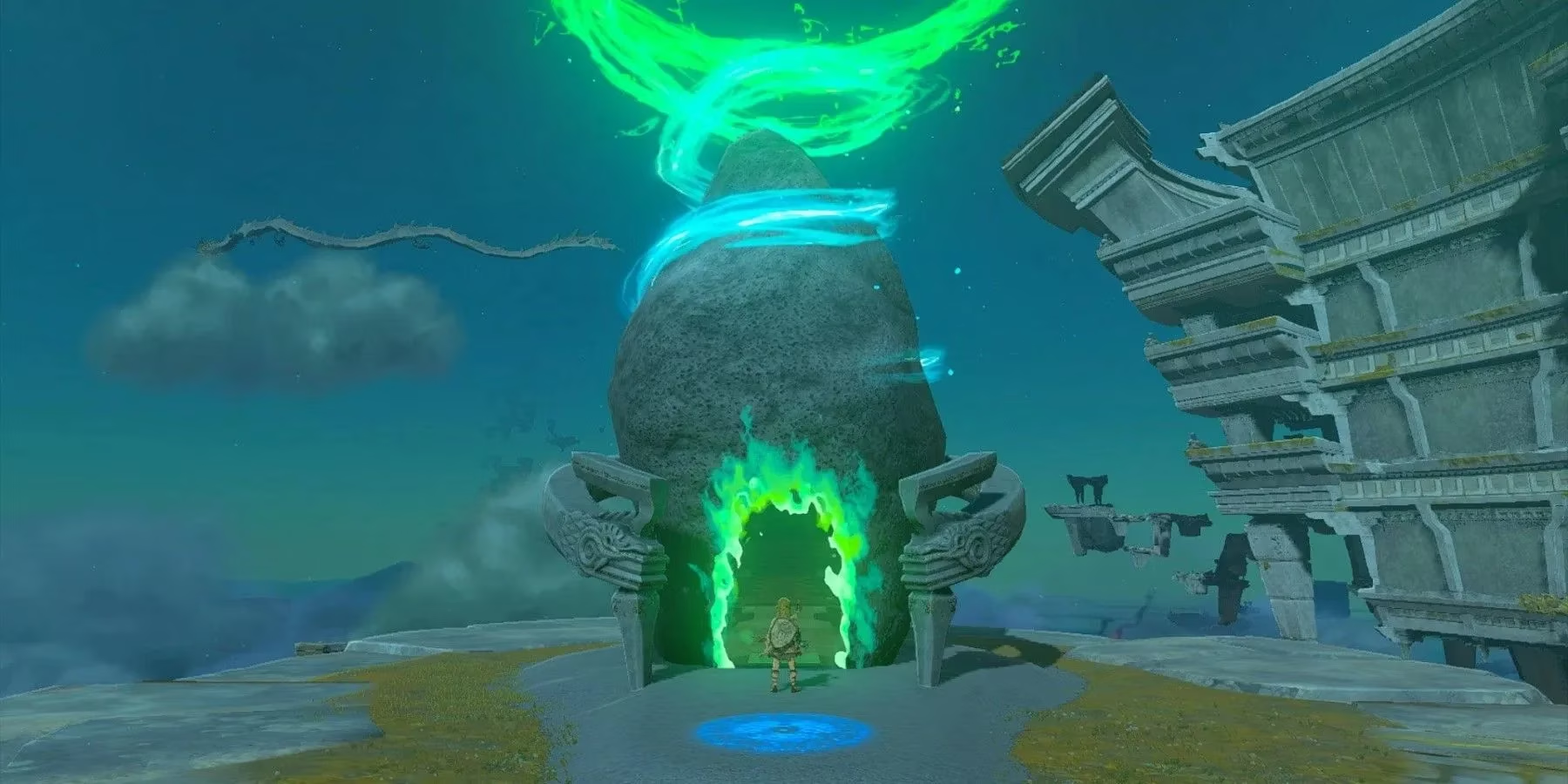
As I reflected on this, I realized my own journey with these puzzles was practically a self-help seminar. Let’s break it down with a handy little table of my "Therapeutic Shrine Moments":
| Shrine Type | What I Did | Corresponding Therapy |
|---|---|---|
| Crystal Shrine Quest | Carried a green rock up a mountain while a Hinox kept napping. | Facing logistical nightmares with patience (and a Rocket Shield). |
| Proving Grounds | Started naked, afraid, and died repeatedly. | Exposure therapy for vulnerability and resource anxiety. |
| Motion Control Maze | Flipped a ball through a labyrinth using gyro while my cat judged me. | Anger management and fine motor skill frustration. |
After completing each one, that Spirit Orb felt less like a currency for heart containers and more like a shiny diploma from Rauru’s School of Interior Demon Lockdown. I’d hand it to a Goddess Statue and whisper, “Another week of inner peace, thanks.”
The director didn’t stop at spiritual purification, though. He revealed that every single shrine (and their subterranean Lightroot counterparts) is a love letter to Nintendo’s home city: Kyoto. Each location is a real-world spot with a slightly altered name to keep us immersed. That “Joku-iu Shrine” I activated? Inspired by the serene Jōju-in Temple. The “Sihajog Shrine” I spent 40 minutes on because I refused to use a guide? A wink at Shijō-dori, a bustling Kyoto street. Fujibayashi even cheekily suggested that players should explore Kyoto and find all the nods for themselves. I did exactly that during a 2024 trip – I stood outside the actual Fushimi Inari Taisha, and in my mind, a “Dispel Darkness” quest prompt popped up. No Spirit Orb materialized, but the matcha ice cream was a close second.
This Kyoto connection adds a whole new layer of meta-adventure. When I revisit Tears of the Kingdom now, I’m not just solving a physics puzzle; I’m taking a virtual tour of a city steeped in history. The shrines become monuments that bridge a fictional ancient war with our world’s cultural landscape. It’s honestly hilarious that all this time, I thought the shrines were simply Rauru’s way of testing if Link could glue two planks together. No, it was a campaign of psychological exorcism disguised as an architectural scavenger hunt through Japan.
Of course, being 2026, we know there’s no DLC on the horizon – Fujibayashi already told us the story is complete. But that just means every morsel of lore from these interviews is precious. The fact that the development team poured this much thought into every glowing orange puzzle orb makes me appreciate the game’s design even more. The next time you see a shrine half-buried in snow on Hebra Peak, remember: you’re not just entering a challenge. You’re walking into a millennia-old demon-proof safe room that also gives you a free therapy session. And somewhere in Kyoto, a real barista might just be making a latte where your Guardian-ravaged stamina wheel was once recharged. 🛕💚
While the world of Hyrule offers its own unique adventures, there are plenty of real-world journeys waiting to be discovered. If you're inspired by the in-game nods to Kyoto and are planning your own pilgrimage to explore the city's rich tapestry of culture and history, consider checking out travel resources that can enhance your trip. Whether you're looking for local experiences or the best deals on accommodations and activities, DealNest can help you plan an unforgettable adventure. With tools to find exclusive offers and insider tips, you can turn your Kyoto exploration into a seamless cultural experience.
Discussion