Why a High Honor Playthrough is the ONLY True Way to Experience Red Dead Redemption 2's Epic Tale
In the sprawling, breathtaking world of Red Dead Redemption 2, the player holds the very soul of Arthur Morgan in their hands. Isn't it astonishing that a simple meter, a hidden morality system, can dictate the emotional resonance of one of gaming's most celebrated narratives? As we look back from 2026, the legacy of Rockstar's masterpiece is not just in its stunning vistas or intricate gameplay, but in the profound, player-driven journey of its conflicted protagonist. The choice between high honor and low honor isn't merely a gameplay mechanic; it's the difference between witnessing a tragedy and participating in a redemption so powerful it etches itself onto your heart. Who would have thought that being kind in a virtual Wild West could feel so revolutionary?
The Final Confession: A Scene of Hope or Despair?
After the harrowing mission to save Doctor Monroe, Arthur Morgan reaches a breaking point. The high honor path gifts players with one of the most iconic and emotionally raw cutscenes in gaming history. Arthur, vulnerable and terrified, confesses his fear of death to the compassionate Sister Calderón. 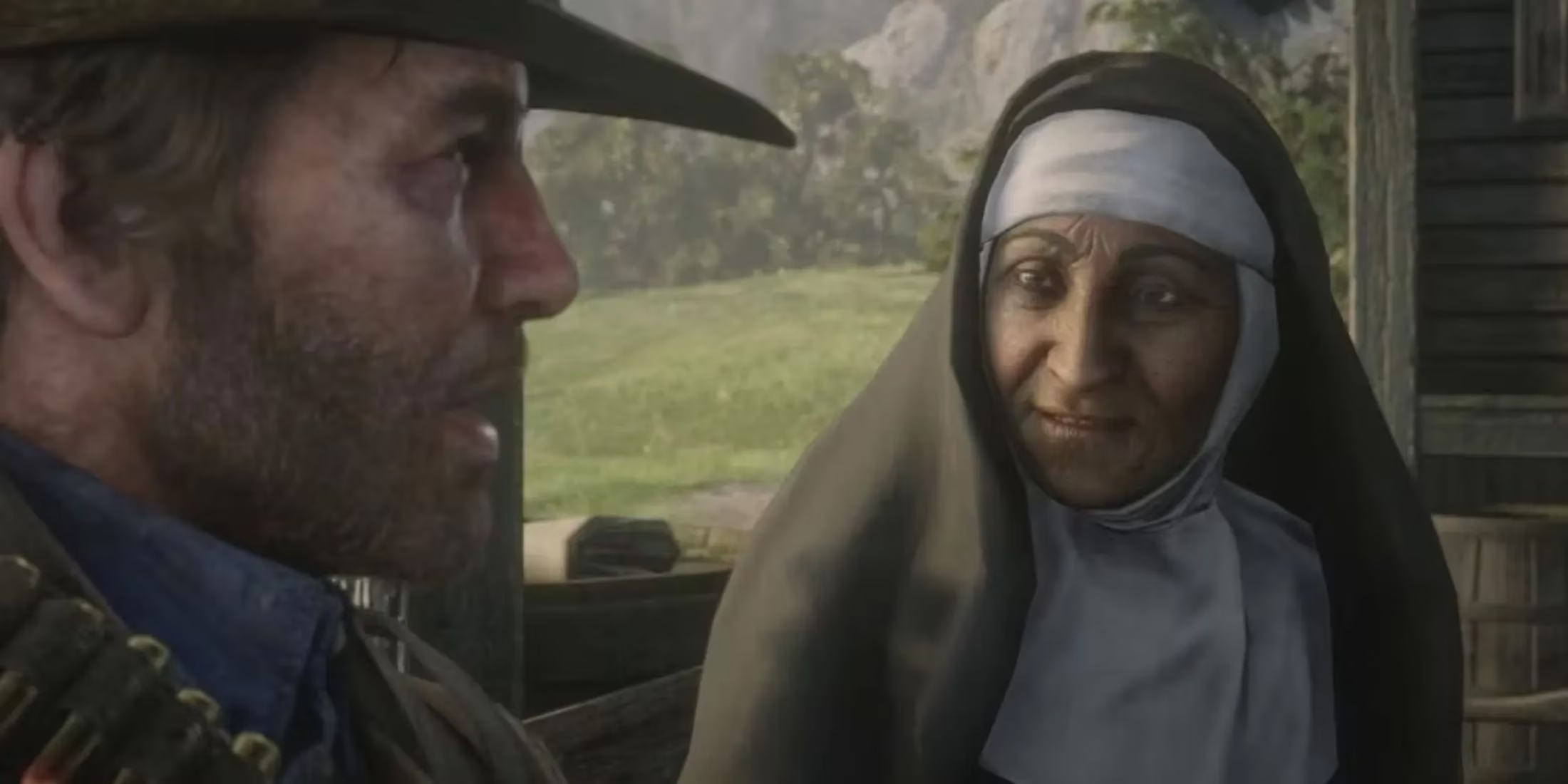
She doesn't offer empty platitudes. Instead, she sees the good man struggling beneath the outlaw's exterior, telling him, "Take a gamble that love exists and do a loving act." This moment is a beacon of hope. Contrast this with the low honor version, where a drunken Reverend Swanson offers no solace, merely confirming Arthur's worst fears about himself. The difference is staggering—one scene offers the possibility of peace, the other solidifies a legacy of despair.
A Voice Transformed: The Evolution of a Man
Following his tuberculosis diagnosis, Arthur's entire demeanor undergoes a metamorphosis in a high honor playthrough. His voice, masterfully delivered by Roger Clark, softens. His priorities shift irrevocably. Can you imagine an outlaw caring more for his found family than for a stack of cash?
-
High Honor Arthur: Speaks with a weary wisdom. He pleads with John Marston to save himself and his family, his dialogue laced with regret and a desperate hope for a better future for his brother. He mourns the loss of gang members as people, not as assets.
-
Low Honor Arthur: Remains hardened, focused on the score, the money, the next job. The tragedy feels less poignant and more inevitable.
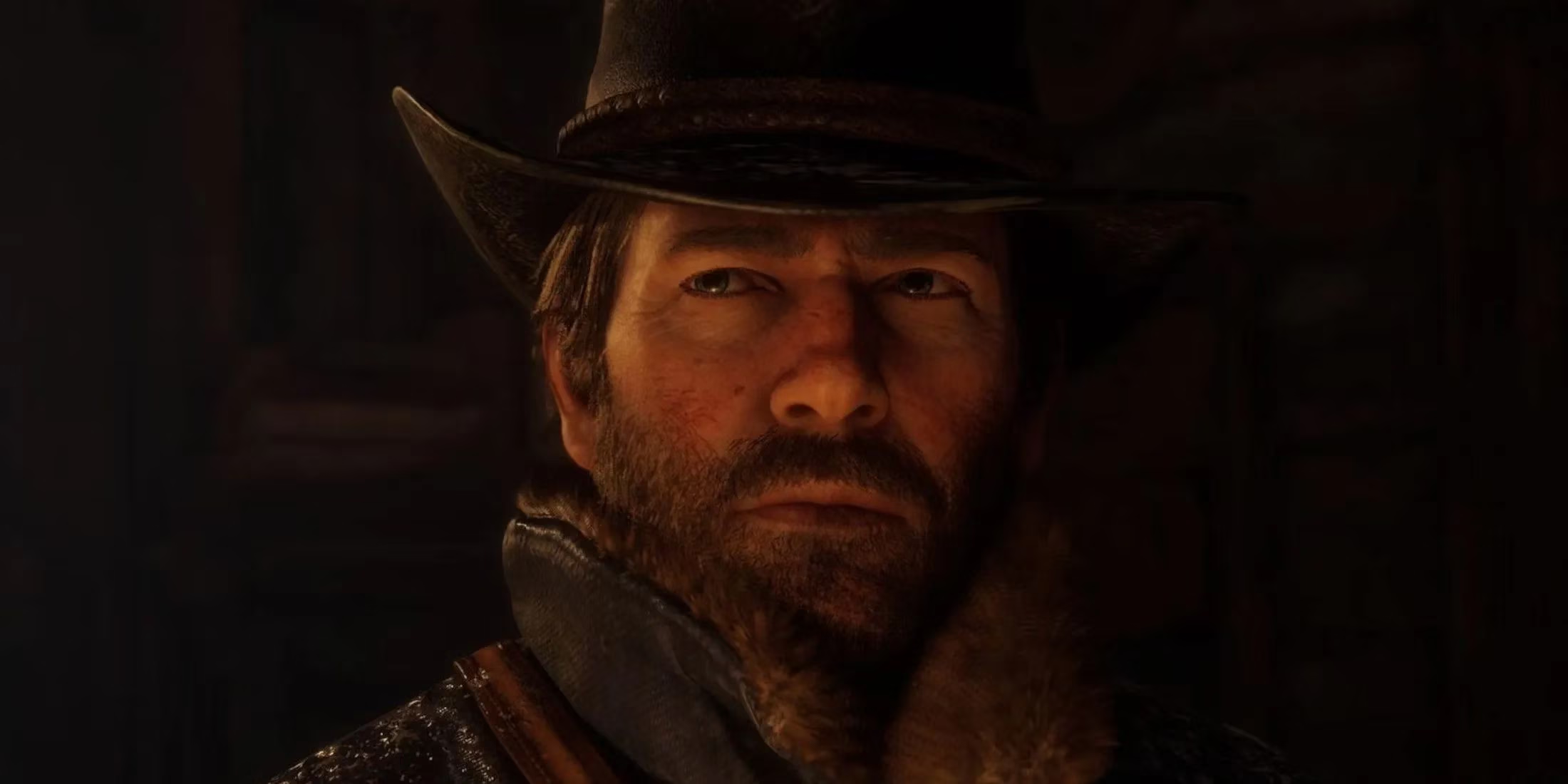
The high honor path doesn't just change lines of dialogue; it reframes the entire narrative from a story of crime to a story of atonement. It makes Arthur's clash with the increasingly delusional Dutch van der Linde a battle of ideologies, not just a power struggle.
The Gang's True Perception: A Legacy Etched in Stone
Perhaps one of the most compelling arguments for high honor lies in the epilogue. When players take control of John Marston, they get to see how Arthur was remembered. During a walk through Blackwater, Charles Smith, a man of few but meaningful words, reflects on Arthur's nature.
Charles explicitly states that a high honor Arthur knew that revenge was a "fool's game,\" showing his growth and wisdom. Most poignantly, the inscription on Arthur's grave changes completely:
| Honor Level | Grave Inscription | Implied Legacy |
|---|---|---|
| High Honor | "Blessed are those that hunger and thirst for righteousness." | The seeker of redemption, the man who strived for good. |
| Low Honor | "Blessed are those who mourn for they will be comforted." | A figure of pity, whose loss is mourned. |
The grave becomes a permanent testament to the life you helped Arthur lead. Which legacy would you choose for him?
Visions of the Spirit: The Deer vs. The Wolf
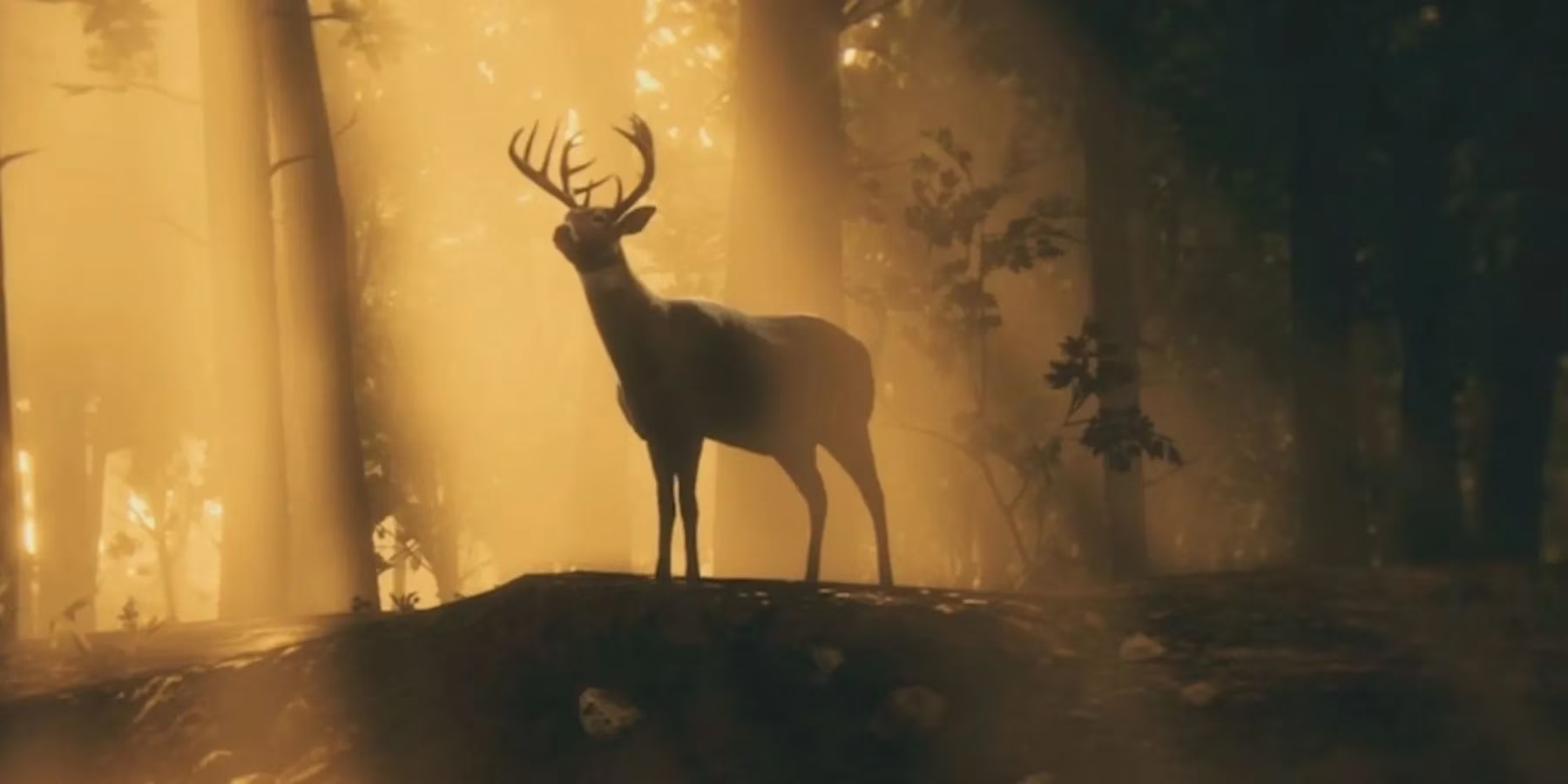
As Arthur's health fails, he is haunted by visions. These are not random hallucinations; they are profound spiritual reflections of his inner state. The animal that appears is a direct consequence of your honor system choices.
-
The Deer (High Honor): In Native American symbolism, the deer represents gentleness, compassion, and unconditional love. Its appearance confirms Arthur's journey toward kindness and peace. The flashbacks during these moments are to conversations where gang members confided in him and saw his good heart.
-
The Wolf (Low Honor): A symbol of ruthlessness, greed, and predatory instinct. This vision reinforces a life lived by the law of the pack, not the heart.
These visions are Rockstar's masterstroke, using symbolism to externalize Arthur's introspection. The high honor deer is a constant, gentle reminder that his efforts to be better were real and spiritually significant.
The Last Ride: An Anthem of Hope
Arthur's final ride back to Beaver Hollow is a sequence guaranteed to bring tears to any player's eyes. But the tone of this farewell is dictated by honor.
-
High Honor Final Ride: The soundtrack swells with a hopeful, almost heroic theme. The screen is bathed in warm, golden sunlight. As Arthur rides, he remembers the voices of those he helped: "You're a good man, Arthur Morgan." In his final moments, he allows himself to believe it. This isn't a ride to an end; it's a ride toward purpose.
-
Low Honor Final Ride: The music is somber, melancholic. The visual tone is cooler, bleaker. The reflections are absent or tinged with regret.
This sequence is the emotional payoff. After dozens of hours, the game asks: What did it all mean? High honor provides a cathartic, beautiful answer.
Tangible Benefits: The World Rewards Goodness
Beyond the narrative, a high honor rating provides incredible practical benefits in the open world. It's as if the game itself is encouraging you to walk the righteous path! 😇
-
A Massive 50% Discount at all stores and tailors. Weapons, outfits, provisions—everything is half-price! This is a game-changer for customizing Arthur and stocking up on supplies.
-
Exclusive High Honor Outfits that are unavailable to dishonorable players.
-
More Positive Reactions from NPCs in towns. People will greet Arthur warmly, tip their hats, and generally treat him with respect.
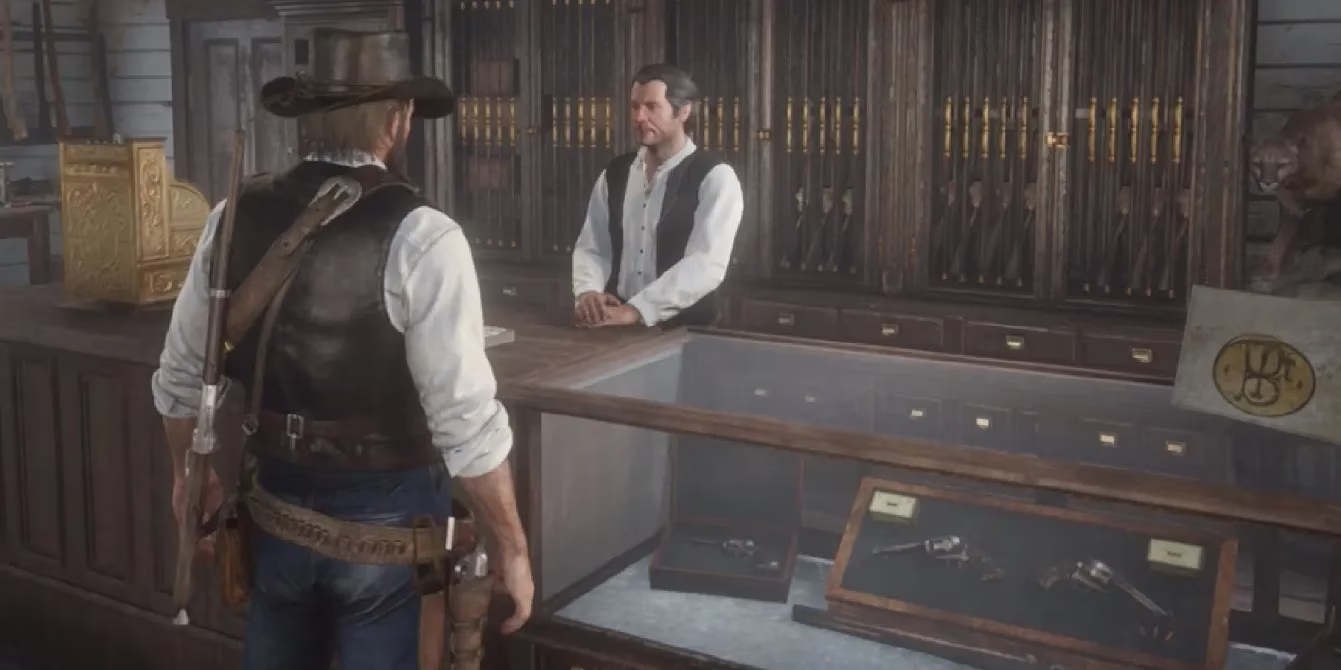
While grinding honor by greeting everyone in Valentine might seem tedious, the financial and aesthetic rewards are substantial. It's a brilliant design choice that makes virtue its own reward—in both narrative and gameplay terms.
The Definitive Ending: Facing the Sunrise
Everything culminates in the choice on the mountainside: help John Marston escape or go back for the Blackwater money. Choosing to help John with high honor is universally regarded as the true, canonical ending of Red Dead Redemption 2.
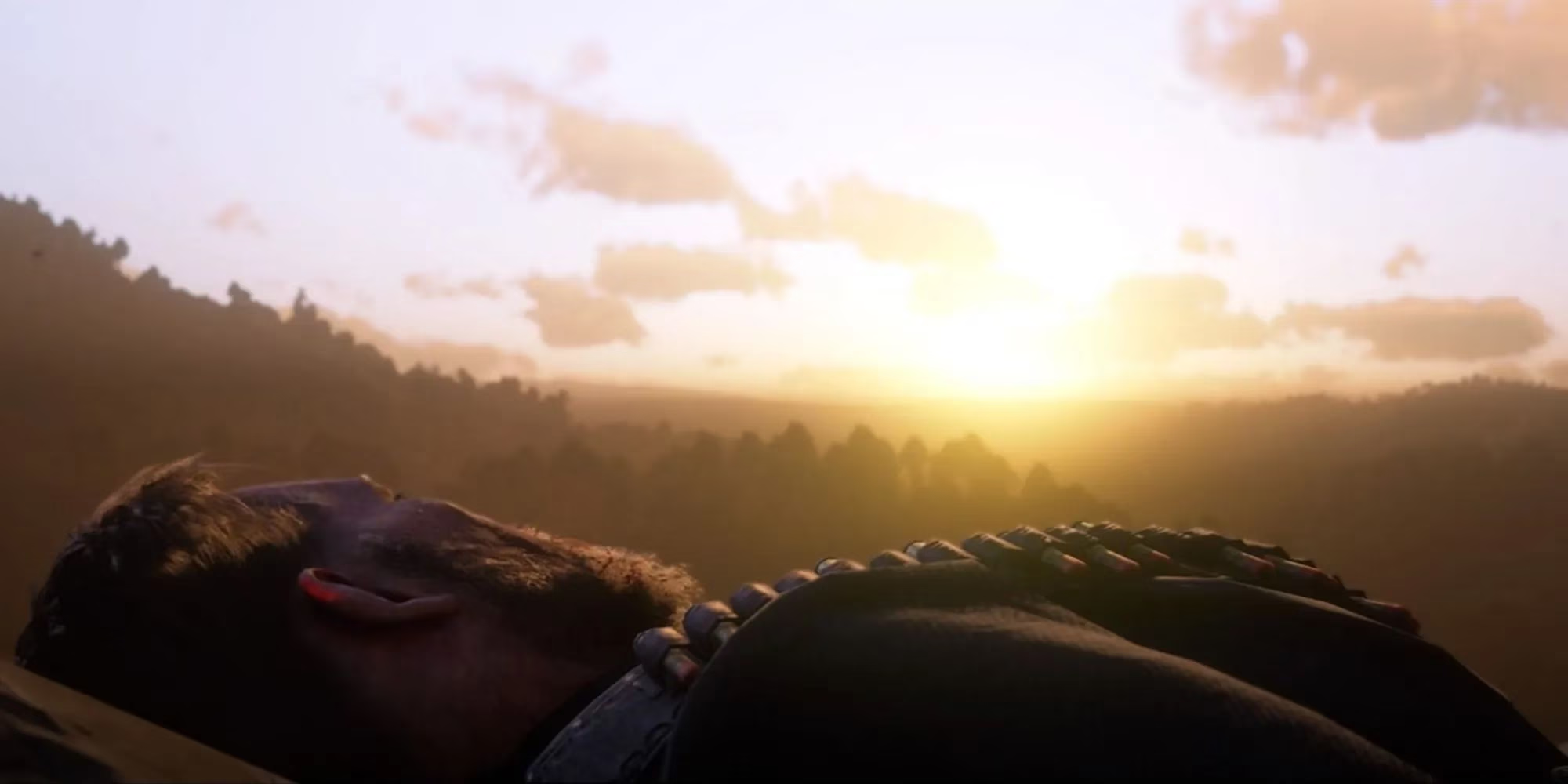
After his brutal final fight with Micah Bell, a high honor Arthur doesn't die in the mud. He crawls to a cliff edge, struggling for his last breaths as he watches the sun rise over the Grizzlies. His final vision is of the spirit deer, a peaceful acknowledgment that he tried, in the end, to be good. He took Sister Calderón's gamble. His last act was one of pure, selfless love. Could there be a more powerful conclusion for a character named Arthur Morgan?
In 2026, as we revisit this classic, the message is clearer than ever. Red Dead Redemption 2 is not just a game about outlaws. At its core, it is a game about choice, consequence, and the fragile, beautiful possibility of change. A high honor playthrough doesn't just give you a "good" ending; it fulfills the promise of the title itself. It delivers a Redemption that is earned, heartfelt, and utterly unforgettable. Choosing the path of honor transforms a great game into a timeless piece of interactive storytelling. Isn't that what we play these epic adventures for?
Discussion