Why the Next Zelda Game Should Be an Open-World Sequel to Skyward Sword's Surface Settlement Story
As I look back on my adventures across Hyrule, one chapter in the grand timeline always feels like an unfinished symphony—the dawn of the world itself. For years, I've been captivated by the untold story that begins where The Legend of Zelda: Skyward Sword left off. That game, for all its controversy, planted a seed of immense potential: the moment Link, Zelda, and the people of Skyloft first set foot on the surface world, ready to build a new home. Now, in 2026, with the era of Breath of the Wild and Tears of the Kingdom confirmed to be behind us, the stage is perfectly set. The next open-world Zelda title has a golden opportunity to not just explore a new map, but to create one, chronicling the founding of the kingdom we've fought for so many times. This isn't just a wish; it's a narrative and gameplay frontier ripe for discovery.
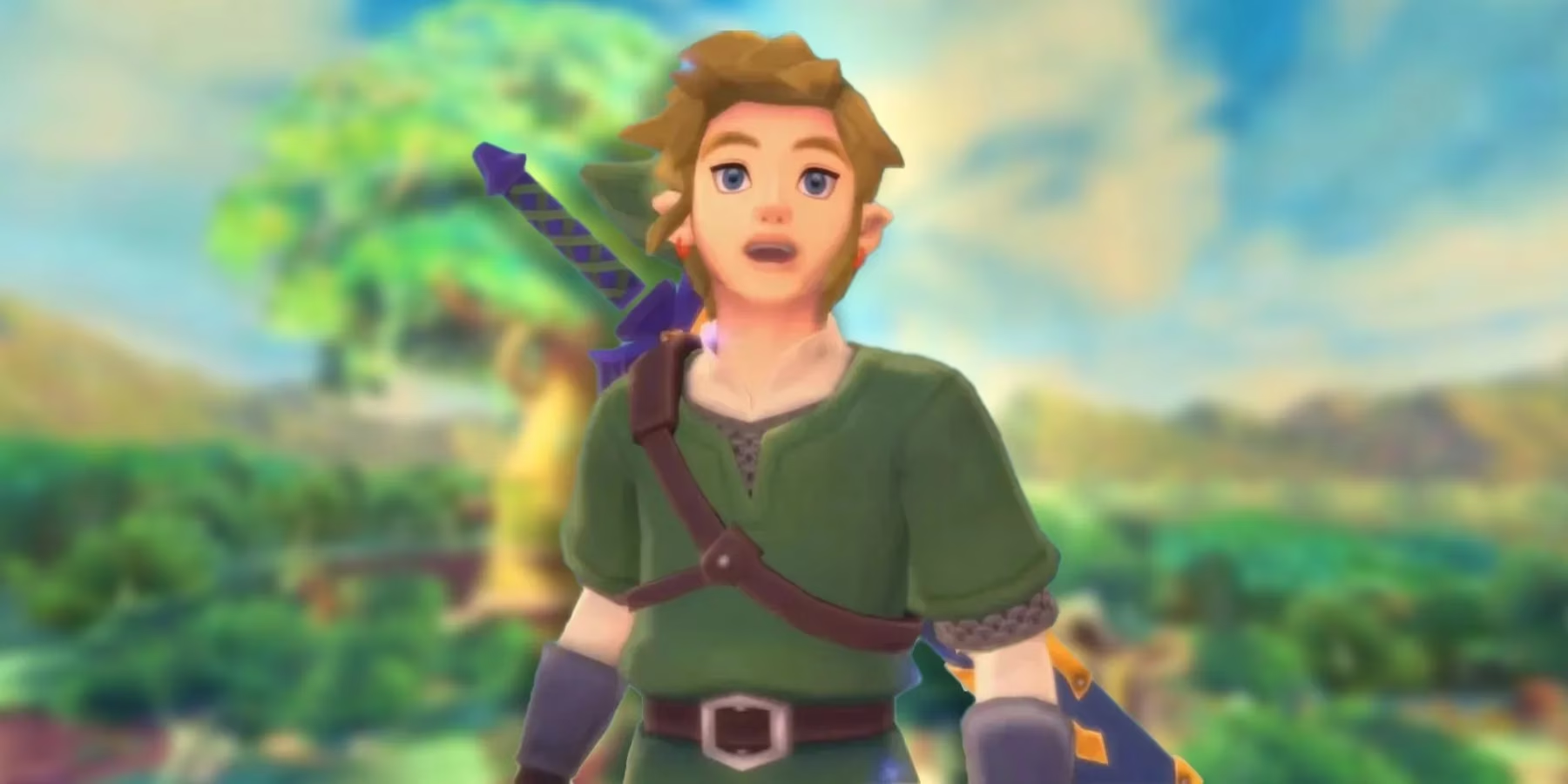
The Perfect Narrative Vacuum: From Skyloft to Hyrule's Foundation
Skyward Sword served as the series' origin story, the earliest point in the convoluted chronology. Its conclusion is a beginning: the defeat of Demise, the descent from the clouds, and the first steps onto a wild, rejuvenated surface. Yet, the next canonical game, The Minish Cap, already shows a more established Hyrule. That leaves a gigantic temporal gap—a blank canvas of centuries. What happened in between? How did scattered surface camps evolve into a majestic kingdom? This era is the ideal setting because it's pure, uncharted lore. We wouldn't be revisiting ruins; we'd be witnessing their construction. The emotional core writes itself: the hope, the peril, and the sheer wonder of building a civilization from nothing.
Gameplay Evolution: Blending Exploration, Survival, and Creation
The premise naturally lends itself to a revolutionary gameplay loop. Imagine a Hyrule that isn't a post-apocalyptic landscape, but a pre-civilizational wilderness. The core pillars could be:
-
Pioneer Exploration: Charting a world devoid of roads, towns, or stable landmarks. Every mountain peak scaled, every forest delved, would be a genuine first discovery. The thrill wouldn't be in finding ancient shrines, but in identifying potential sites for the first settlement, the first mine, or the first sacred spring.
-
Settlement Building & Management: This is where the series could take a monumental leap. Drawing inspiration from beloved mechanics elsewhere, we could see a deeply integrated town-building system.
-
The Tarrey Town Blueprint: Recall that wonderful side quest in Breath of the Wild? Now, imagine that as a central, expanded mechanic. You wouldn't just recruit one person for a shop; you'd need to attract diverse settlers—farmers, blacksmiths, guards, scholars—each with unique needs and skills.
-
A Living Community: Your choices would shape the settlement's culture, economy, and defenses. Allocate resources to build a forge to craft better weapons, or a granary to ensure food security. The town would grow and change visually and functionally based on your leadership.
-
-
Survival Crafting, Perfected: Breath of the Wild introduced light survival elements. Here, they would become essential. Establishing a settlement means securing resources: hunting and gathering, mining ore, felling timber. Crafting wouldn't just be for weapons and elixirs, but for building materials, tools, and infrastructure. The loop between exploring for resources and using them to build and fortify your home would be incredibly compelling.
Conflict and Progression: Defending the Dream
Of course, this fledgling civilization would face threats. The remnants of Demise's malice wouldn't vanish overnight. We could encounter:
-
Monster Raids: Your settlement would periodically come under attack, forcing you to design defenses—walls, watchtowers, traps—and perhaps even command settlers in defense.
-
Environmental Challenges: Harsh weather, natural disasters, or mysterious blights could threaten your food supply or structures, adding a layer of strategic resource management.
| Gameplay Pillar | Breath of the Wild/Tears | Potential Skyward Sword Sequel |
|---|---|---|
| World State | Post-Calamity Ruins | Pre-Civilization Wilderness 🌿 |
| Primary Goal | Reclaim and Remember | Build and Establish 🏗️ |
| Key Mechanics | Physics/Chemistry, Sheikah Tech | Settlement Building, Deep Crafting, Pioneer Charting |
| Narrative Drive | Uncovering the Past | Creating the Future 🔮 |
Progression could be tied directly to your settlement's growth. As it evolves from a camp to a town to a fledgling castle town, it would unlock new quests, technologies (perhaps the early discovery of simple machinery or magic), and access to previously unreachable regions. The legendary Master Sword might not be a tool to find, but an artifact to forge for the first time, requiring a quest to gather its essential components and a sacred site to bless it.
A Unique Identity for a New Era
This direction would give the next Zelda a distinct identity, avoiding the "bigger Hyrule" trap. It's a foundational myth simulator. The familiar thrill of combat and exploration would be enriched by the profound satisfaction of creation and stewardship. We would experience the birth of Hyrule's traditions, the reason certain locations become sacred, and the origin of the eternal bond between the heroic spirit, the royal lineage, and the land itself.
In essence, a sequel to Skyward Sword's surface settlement story is the logical and exciting next step. It respects the series' lore by filling its most intriguing gap, and it pushes gameplay into bold new territory that merges the best of open-world adventure with the heart of community and creation. After saving the world so many times, it would be an honor to finally help build it. 🛡️✨
Discussion