From Skyward Swords to Sailing Seas: The Enduring Legacy of Zelda's Worlds in Tears of the Kingdom and Beyond
As I look back on my time with The Legend of Zelda: Tears of the Kingdom, released in 2023, I'm struck by how it masterfully synthesized past ideas into a breathtaking new experience. Following Breath of the Wild was a monumental task, but Tears of the Kingdom carved its own identity through its revolutionary building mechanics, creating one of the most open-ended sandbox adventures I've ever played. Yet, the conversation often circles back to its familiar Hyrule map. For me, this critique misses a fascinating point: Tears of the Kingdom's soul is deeply intertwined with a much older, and often divisive, entry—Skyward Sword. Its true genius lies not in abandoning the past, but in reimagining it with the power of modern technology and design philosophy.
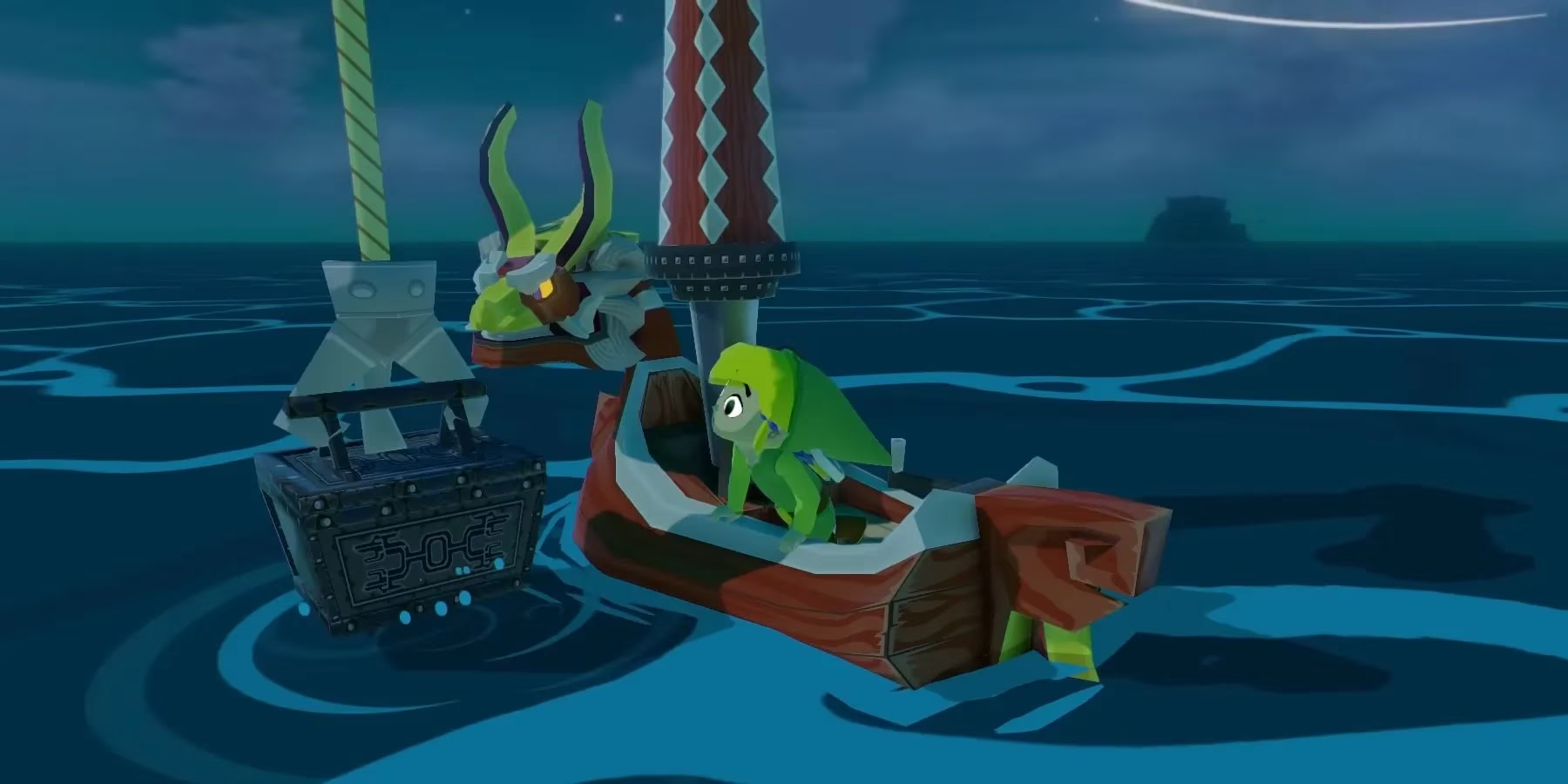
Skyward Sword holds a complex place in my heart. I remember being captivated by its role as the series' origin story, weaving lore that gave profound weight to the eternal struggle between Link, Zelda, and Ganon. Its most defining feature, the floating Sky Islands, created a sense of verticality and mystery that felt entirely new for Zelda. However, I also recall the frustration. The Wii Motion Plus controls, while immersive in theory, often felt clunky and exhausting, a sentiment shared by many players at the time. The brilliant HD remaster on the Switch solved this by offering traditional controls, finally letting the game's core ideas shine without the barrier of finicky motion inputs.
This is where Tears of the Kingdom performed its magic. It didn't just reference Skyward Sword; it absorbed its most ambitious concept and set it free. Launching from the towers of Hyrule's surface and soaring into the vast, interconnected network of Sky Islands is a moment of pure, unadulterated joy. The seamless transition, the constant high-stakes threat of a long fall, and the intricate design of the islands themselves—it all felt like the immersive, expansive version of the concept Nintendo first dreamed of on the Wii. The Sky Islands became, for me, one of the absolute highlights of TotK, and their excellence is a direct tribute to the foundations laid by Skyward Sword.
-
Vertical Exploration: Skyward Sword introduced layered worlds. Tears of the Kingdom perfected it with its three-tiered map: the Depths, the Surface, and the Sky.
-
A Sense of Origin: Both games heavily focus on beginnings—Skyward Sword for the timeline, Tears of the Kingdom for the Zonai civilization.
-
Evolving Controls: Where Skyward Sword was bound by its hardware, Tears of the Kingdom used the Switch's versatility to make navigation intuitive and powerful.
This successful revival of old ideas makes me dream about where the series could sail next. If Tears of the Kingdom looked to the skies, I believe the next logical and thrilling evolution would be to return to the seas, drawing deep inspiration from The Legend of Zelda: The Wind Waker. That game's oceanic overworld remains, in my opinion, one of the most uniquely atmospheric and expansive maps ever created. Beginning on a small, sleepy island and then being handed the sail to a world of endless blue instilled a sense of discovery that has rarely been matched.
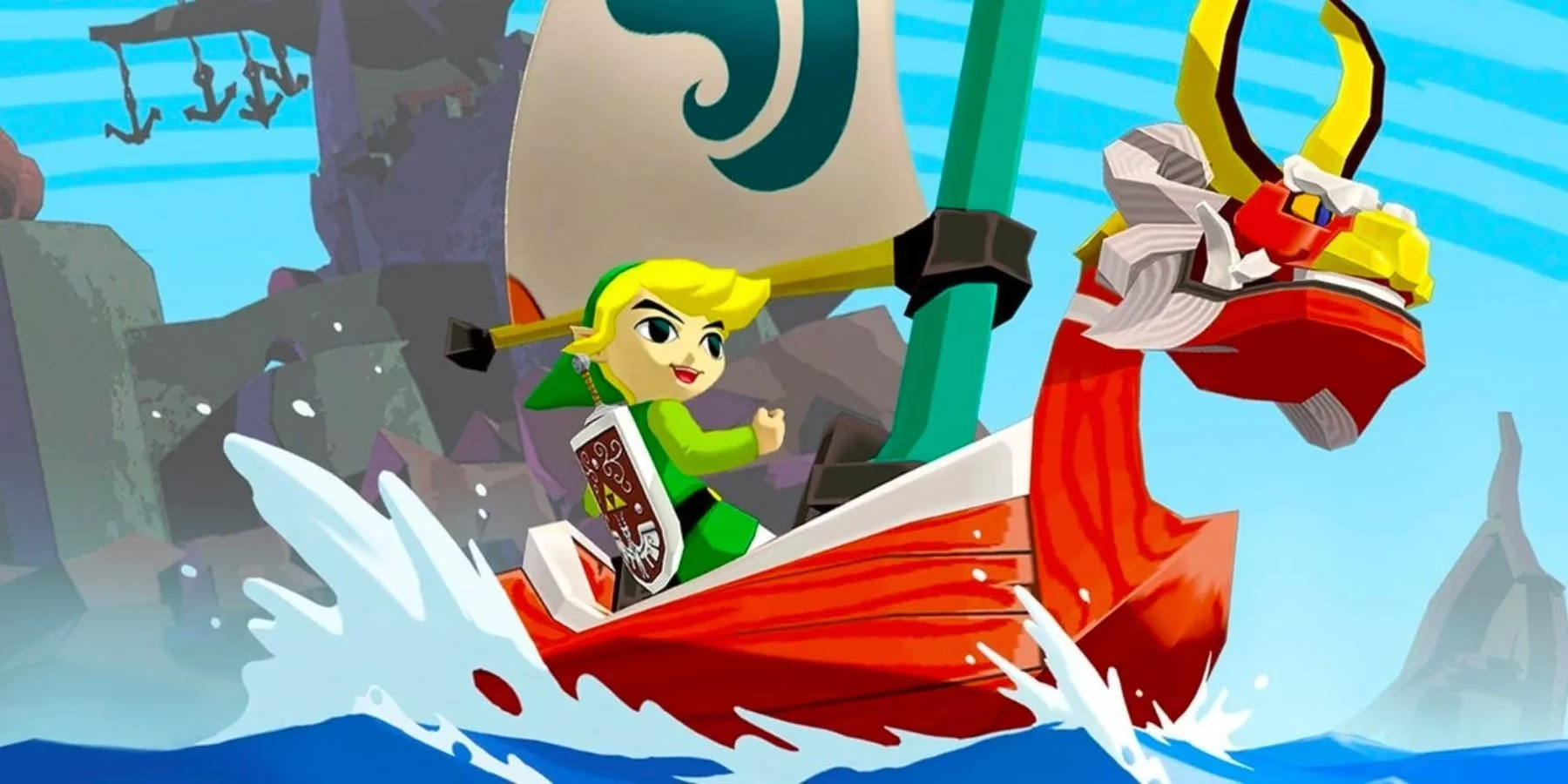
Imagine a new Hyrule, once again reshaped by a great flood, but built with the lessons learned from Breath of the Wild and Tears of the Kingdom. The core appeal of modern Zelda is discovery, and a vast, open sea dotted with mysterious islands, hidden reefs, and sunken ruins would be a perfect canvas. Sailing wouldn't just be traversal; it could be a deep gameplay pillar. We could have:
| Wind Waker Concept | Potential Evolution in a New Game |
|---|---|
| Surface Sailing | Dynamic weather affecting travel, ship customization, and naval combat. |
| Island Discovery | Denser, more complex islands designed with TotK's verticality and physics in mind. |
| Limited Diving | Full underwater exploration, discovering submerged towns, caves, and ancient secrets. |
It's been over two decades since Wind Waker first released. Nintendo's technological and design innovations since then—physics engines, chemistry systems, vast seamless worlds—would make revisiting the Great Sea an absolute thrill. Furthermore, Wind Waker gave us some of the most memorable characterizations in Tetra, a fierce and independent version of Zelda, and a more expressive, determined Link. A new game could draw from that spirit, offering a cast with that same vibrant personality.
For me, the legacy of Tears of the Kingdom is that it proved Nintendo's classic Zelda ideas are not outdated; they are simply waiting for the right technology and vision to be fully realized. It honored Skyward Sword by fulfilling its potential. Now, I sail my constructed hovercraft over Hyrule and can't help but dream of trading it for a custom sailboat on a new, uncharted ocean. Borrowing from Wind Waker wouldn't be a step back; it would be a refreshing departure into a beloved yet unexplored frontier, using everything learned in the last ten years to create the definitive seafaring adventure. The horizon has never looked more inviting. 😊
Discussion