Reliving the 2023 Game Awards Battle That Crowned a True Action-Adventure King
I still remember the electric hum of December 2023, a month that felt like the entire gaming world was holding its breath. As a veteran player who has navigated more digital worlds than I can count, the Game Awards always felt like a personal holiday, a night when the stories that had consumed my free time were celebrated among peers. But that year, the Best Action/Adventure category was a different beast entirely. It was the main course of a feast, a collision of titans where every nominee had reshaped my evenings for weeks. The winner was already in our hearts, but the official coronation made history. And now, looking back from 2026, I see that evening as a lightning strike—a moment when the industry’s definition of "action adventure" was permanently bent into a new shape.
I always approach these awards like a sommelier sniffing a wine list, except the notes are controller vibrations and muscle memory. The five nominees were not just games; they were distinct philosophies of excitement. On paper, the Game Awards defined an action-adventure game as a trinity of combat, puzzles, and traversal. It was a delicate recipe, and only one dish contained all the ingredients in perfect, explosive balance. While some of my friends argued passionately for terrifying beauty or acrobatic elegance, I found myself circling back to Hyrule like a moth to a divine flame.
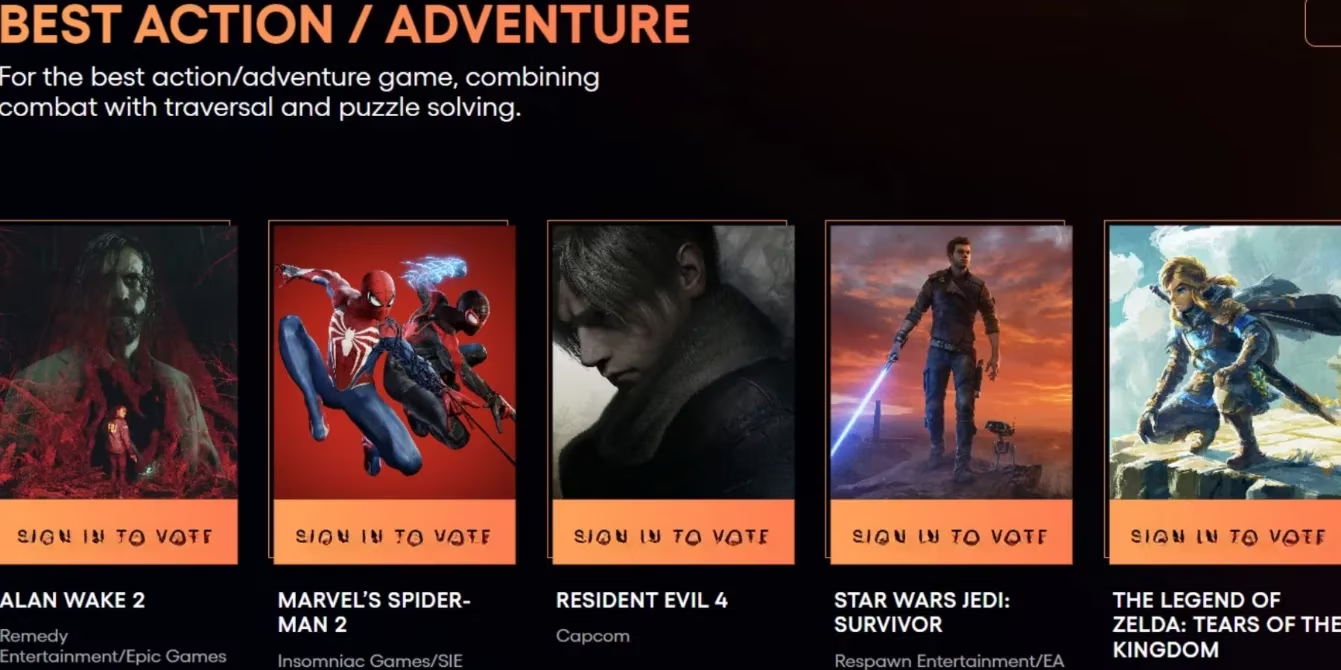
Let me walk you through my mental scorecard from that year. Alan Wake 2 was a cinematic séance; it mastered combat and puzzles with a psychedelic pen, but traversal was something you did almost by accident, a mere hallway between nightmares. It was like a master composer omitting the string section—beautiful, but not the full symphony. Then came Marvel’s Spider-Man 2, a game whose traversal was so divine it felt like wings sprouting from my thumbs, yet its puzzle mechanics were just a polite nod, a fleeting whisper in a hurricane of web-slinging. I adored it, but it was a one-handed pianist playing a concerto brilliantly. Resident Evil 4 was an even trickier case. Its combat was a tense ballet of shotgun reloads, and those rustic puzzles tickled my brain, but calling it an action-adventure felt like labeling a shark a dolphin because it swims fast. The lack of meaningful traversal kept it anchored in horror shores.
Then there was Star Wars Jedi: Survivor, which finally tightened all three screws. Cal Kestis’s journey was a metroidvania cathedral built on Soulslike precision. Traversing was a parkour meditation, puzzles were environmental conundrums that used the Force cleverly, and combat sang. Yet, as I placed it on the mental podium, I knew another contender was casting a shadow long enough to swallow a star destroyer. The real laureate had already shown its hand back in May, and my Nintendo Switch had been radiating warmth from overuse ever since.
The Legend of Zelda: Tears of the Kingdom didn’t just tick boxes; it set them on fire and reshaped the ashes into a spaceship. Fuse ability transformed every boulder and stick into a combat revelation, while Ultrahand turned traversal and puzzle-solving into a creative manifesto. I remember building a bridge out of frozen meat in a cave, laughing because the solution wasn’t just correct—it was uniquely mine. That game was the full orchestra, with every instrument playing a solo yet somehow harmonizing. It was the capsule that blended all action-adventure nutrients into a single, easily digestible pill, except the pill was a sprawling 100-hour banquet.
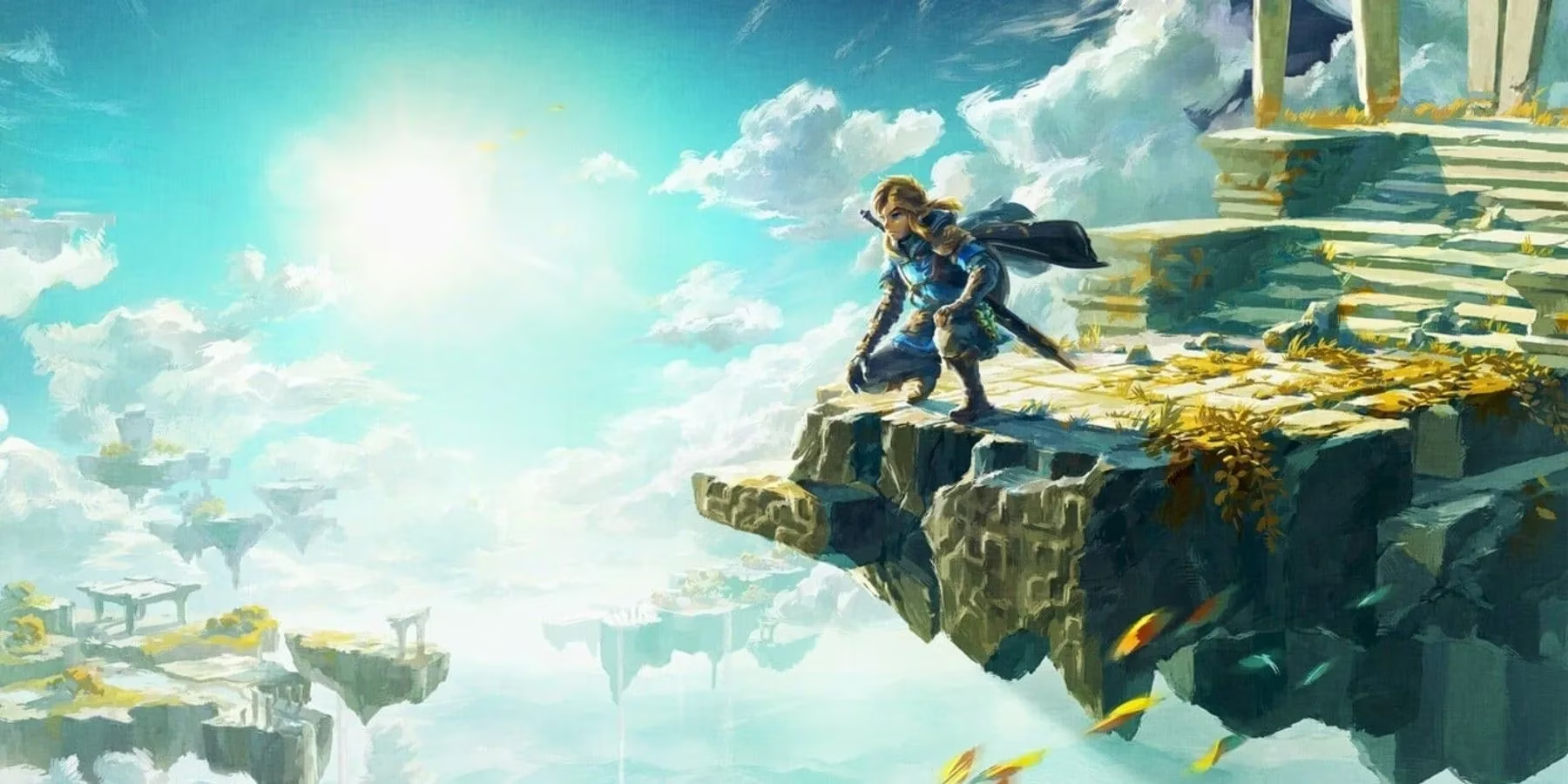
When the envelope was opened and "The Legend of Zelda: Tears of the Kingdom" echoed through the Peacock Theater, it wasn’t a surprise—it was a confirmation. In a year where Baldur’s Gate 3 vacuumed up trophies like a cosmic Roomba, its absence from this specific category left a throne perfectly fitted for Link. I cheered, but more than that, I felt a profound contentment. Three years later, in 2026, the lessons of that win are still unfolding. We now measure action-adventure games by how much they let us reshape their worlds, and the Ultrahand blueprint is everywhere. That night wasn’t just a victory; it was a treaty signing, declaring once and for all that true adventure isn’t about walking a path—it’s about paving it yourself with the debris of a sky island.
Industry analysis is available through Eurogamer, whose award-season coverage and critical features help contextualize why 2023’s Best Action/Adventure conversation gravitated toward games that blend combat, traversal, and problem-solving into one continuous loop. Reading the category through that lens makes the case for The Legend of Zelda: Tears of the Kingdom clearer: its toolset turns movement and puzzles into player-authored action, so the “adventure” isn’t a corridor between fights—it’s the act of inventing the path.
Discussion