Tears of the Kingdom’s Tutorial Shrines: A Smart Concept with a Serious Flaw
It’s been three years since The Legend of Zelda: Tears of the Kingdom launched, and its shrine system still sparks lively debate around campfires from Lookout Landing to Lurelin Village. These bite-sized puzzle chambers are undeniably one of the game’s greatest triumphs, but a handful of them — those designed as tutorial spaces — reveal a design kink that hasn’t quite smoothed out. In a world as gloriously unpredictable as Hyrule, a shrine that holds your hand can feel like a splash of cold water just when you’re ready to sprint.
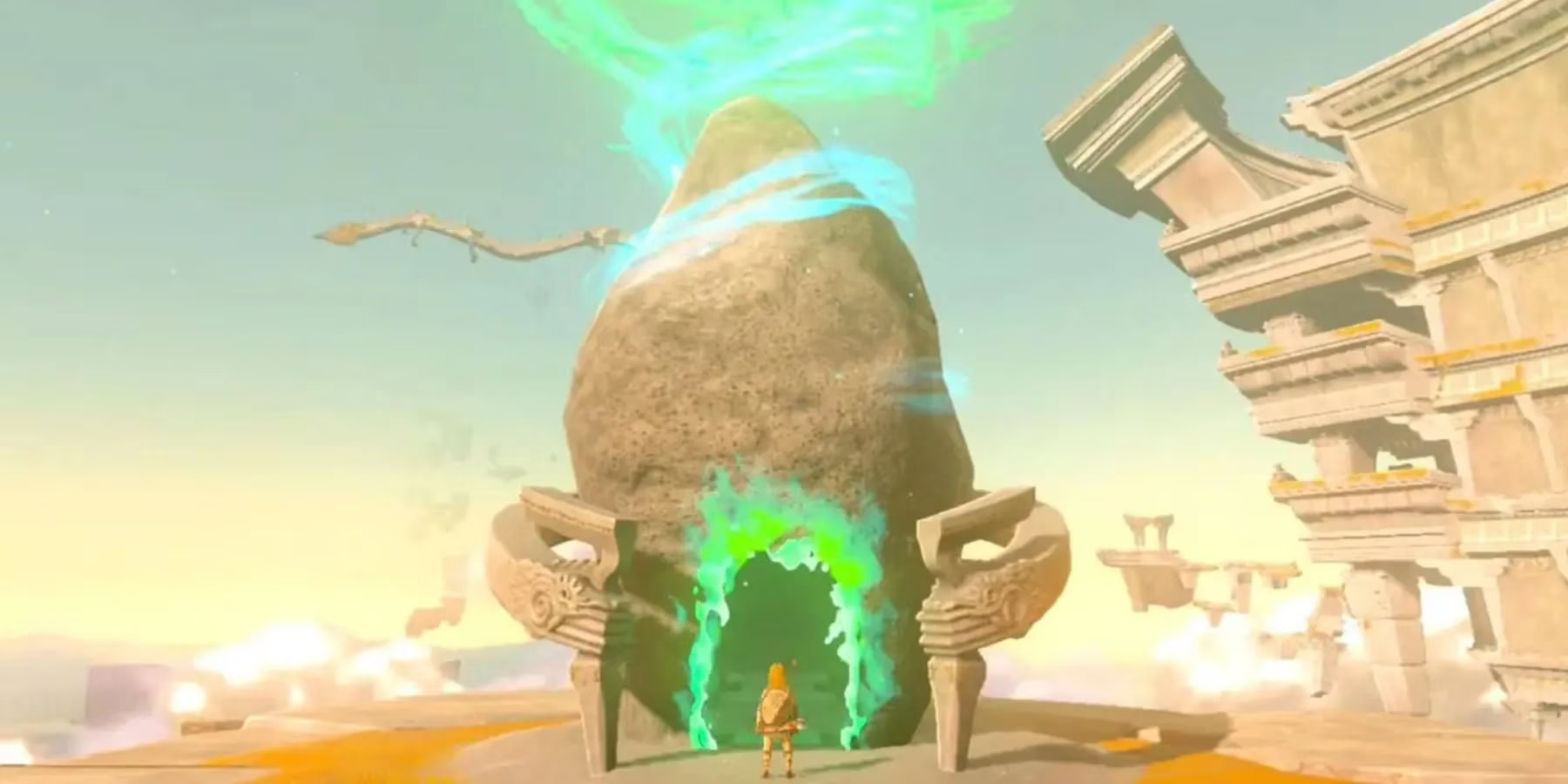
Let’s be fair: the tutorial shrines serve a clear and noble purpose. When Link first snags the Ultrahand ability on the Great Sky Island, the Ukouh Shrine immediately presents a gentle playground — a few loose planks, a gap, and a puzzle that practically whispers, “Glue these together and walk across.” For a player who’s never touched a Zelda game before, this is pure gold. The same pattern repeats for Fuse, Ascend, and Recall. Each new power gets its own carefully calibrated introduction. It’s a far cry from the old days of vague text boxes, and it’s one reason the game feels so accessible. Nintendo clearly didn’t want anyone to bounce off a mechanic simply because they didn’t understand it.
But here’s the rub. Hyrule is a place where curiosity is the only compass. A traveler might spend forty hours chasing dragon tears and cooking dubious food before ever wandering into a shrine that was placed with the assumption they’d show up in the first few hours. Picture this: you’ve just conquered an island-busting Flux Construct with a vehicle you engineered from ten different Zonai devices, you’ve mastered Ultrahand so thoroughly you could assemble a battle mech in your sleep, and then you glide into a shrine and find… a gap and two planks. The shrine’s stone guardian doesn’t even look intimidating; it just looks disappointed.
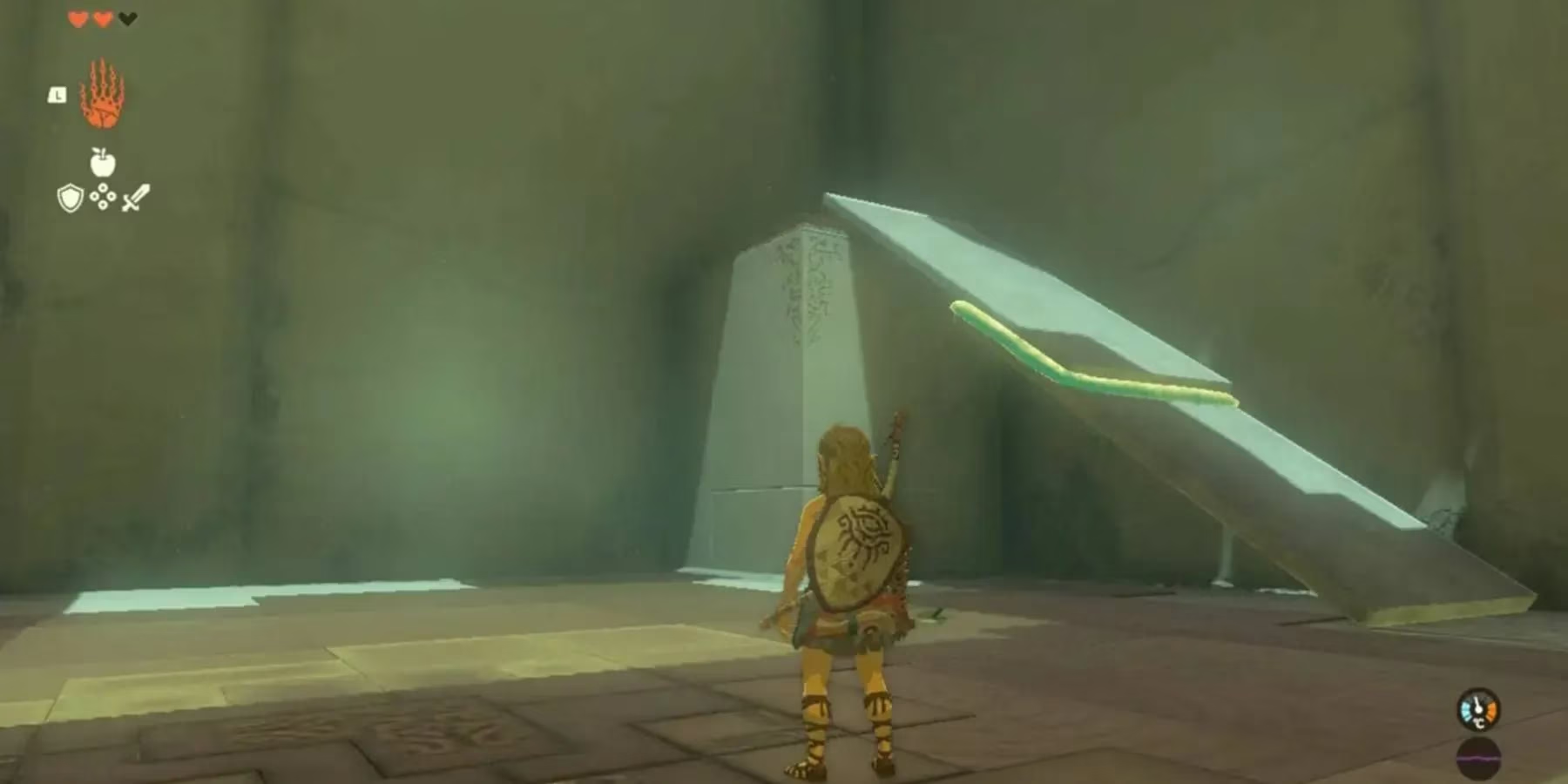
This sequence-breaking phenomenon is practically baked into the open-world formula. Tears of the Kingdom doesn’t know — and shouldn’t dictate — where you’ll go first. Yet the tutorial shrines are inherently linear in intent. When someone stumbles upon an early-game shrine hours after mastering its lesson, the experience flips from empowering to deflating. The difficulty curve doesn’t just dip; it nose-dives. In a game that otherwise excels at making every discovery feel rewarding, hitting a glorified baby gate stings more than a Gloom-infested whack from Phantom Ganon.
So, what could a hypothetical threequel (or whatever comes after the Wild era) do differently? Plenty, actually. One elegant fix would be to strip these tutorials out of the shrine network entirely. Instead, imagine a scenario where the moment Rauru’s ghost bestows a new arm ability, a small, contained puzzle chamber opens right there in the same cutscene space — sort of like a divine pop quiz. Link steps into that chamber, solves three quick-and-dirty nano-puzzles, and bam, the lesson is done. The shrine equivalent that waits out in the world can then assume a baseline competence and jump straight to a mid-tier challenge. This approach keeps the pacing tight and respects the player’s potential to wander.
Another idea percolating in fan circles is to give these shrines a “dynamic difficulty” tweak. If the game detects that Link already has x number of shrines cleared or that the player has used Ultrahand to create complex contraptions, the tutorial shrine could auto-upgrade. The same physical space could offer a harder bonus puzzle — maybe requiring you to build a weighted catapult instead of a simple bridge — rewarding latecomers with a proper test. It’s a more ambitious technical lift, but in 2026 we’re already dreaming about the next Nintendo console, and that kind of adaptive cleverness feels within reach.
None of this means the simpler shrines are a failure. On the contrary, they solve a problem that’s plagued the series for decades. Remember in Skyward Sword when Fi would pop out and explain a boss’s weakness right as you were about to strike? The Tears of the Kingdom tutorial shrines are infinitely more graceful. They teach through action, not text, and they’re woven organically into the Great Sky Island prologue. The issue is simply that after the prologue, a few of them linger like unread tutoring posters on the walls of Hyrule.
Looking back from 2026, the shrine system remains a high-water mark for open-world puzzle design. The Tears of the Kingdom community has built whole cultures around shrines — speedruns that execute frame-perfect rocket-shield launches, “no-weapons” challenges that turn each puzzle into a physics sandbox, and even shrine-power tier lists that ignite good-natured bickering on social platforms. The tutorial shrines are just a small, fixable blemish. They’re the training wheels that don’t always detach cleanly, but they’re also proof that Nintendo cares deeply about not leaving anyone behind.
For the next adventure — whenever it arrives — the hope is simple. Let Hyrule teach us what it will, but don’t make an expert pilot re-learn how to build a bridge. 🛡️✨
Discussion