The Dawn of the West: Awaiting the Ultimate Red Dead Redemption Saga
The ghost of the West still rides on the digital plains, a memory etched not just in pixels but in the soul of a generation. To cross the final ridge in Arthur Morgan's tale and see the vast, sun-bleached expanse of New Austin unfurl was a revelation that transcended mere gameplay; it was the quiet, profound gift of a completed circle. That empty, beautiful land west of Blackwater became a promise, a silent testament to a story left partially untold in its full, modern glory. While the industry has marched forward with the relentless pace of a steam locomotive, that original masterpiece, Red Dead Redemption, remains a stately portrait locked in an older, gilded frame—its spirit undimmed, yet its form yearning for the light of a new dawn.
The Silent Cartographer: Mapping the Future of a Classic
The desire for a remake is a campfire that burns brightly in the hearts of the community, its smoke signals rising in clear, persistent columns. Yet, from the hallowed halls of Rockstar, there comes only a purposeful, knowing silence. This quiet is not neglect, but the careful deliberation of a master cartographer surveying the stars before committing a new continent to parchment. The original game is a cornerstone, a narrative and open-world achievement that redefined the genre. However, its technical confines are now as visible as the seams on a well-loved saddle. The goal is not merely to polish the brass but to rebuild the entire saloon with timber cut from the next technological frontier, ensuring John Marston's final ride feels as immediate and visceral as Arthur's last breath.
The Trilogy's Tapestry: Weaving a Cohesive Epic
Patience, in this case, is a virtue woven from strategic foresight. The most poetic and logical path forward lies not in a solitary remake, but in the completion of the saga's triptych. A third installment in the Red Dead series is not a matter of if, but when. This new chapter, likely a prequel delving into the nascent, hopeful days of the Van der Linde gang, will establish the final, most refined standard for graphics, mechanics, and world interaction. To then revisit the original Red Dead Redemption with those tools is to ensure the entire trilogy sings in harmonious, devastating concert.
Imagine the experience: to begin with the gang's formation in a hypothetical Red Dead Redemption III, a story as raw and hopeful as a sunrise over the Grizzlies. To then transition into the tragic, golden-hour opulence of Arthur's story in Red Dead Redemption II, where the dream begins to fray at the edges like worn denim. Finally, to conclude with a remade Red Dead Redemption I, where John Marston walks the path of atonement under a sun that sets on the West itself. This seamless journey would eliminate the dissonance that plagues revisiting older series entries, where advancements in design can make predecessors feel like stumbling through a dream remembered in fragments.
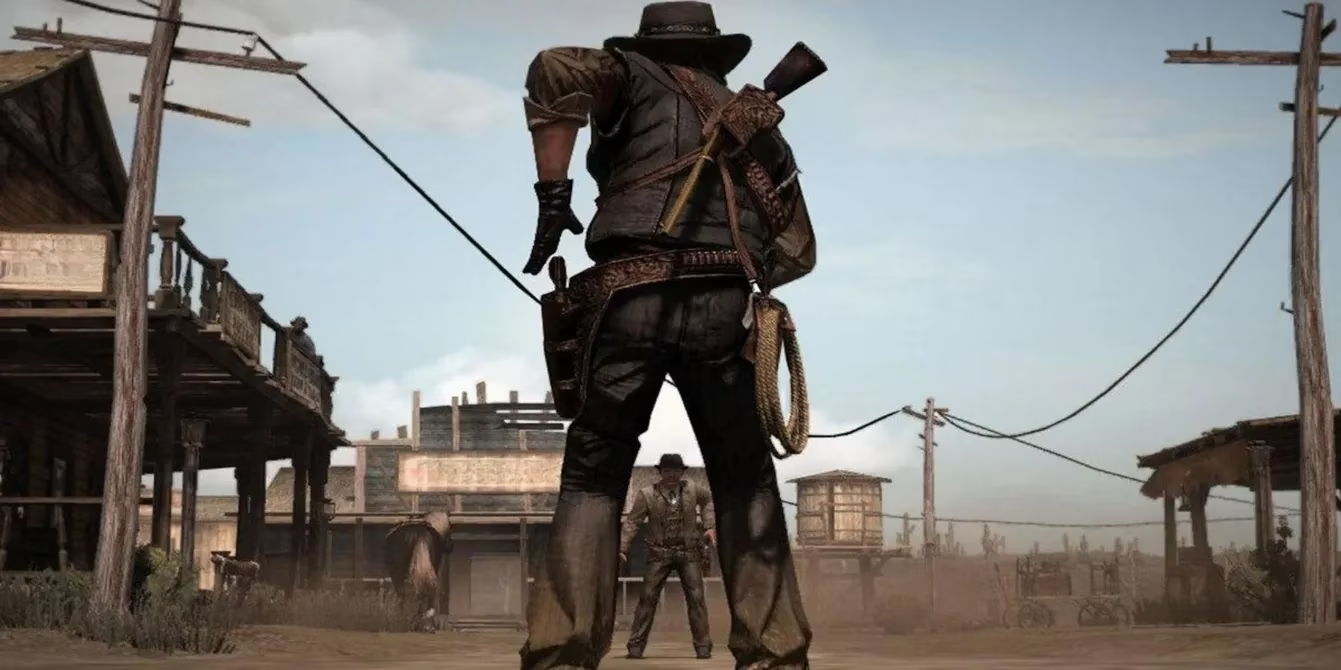
The promise of a familiar vista, awaiting its renaissance.
The Lucas Legacy: A Chronology of Ruin and Redemption
The franchise has always embraced a narrative structure reminiscent of a tragic epic told in reverse. We met the end of the story first—John's doomed quest for redemption—and then journeyed backward to witness the beautiful, crumbling world that created him. A third game would push that timeline further back, exploring the fertile ground from which the gang's loyalty and eventual betrayals sprouted. Releasing this new beginning in tandem with a remake of the original ending would create a narrative loop as perfect and self-contained as a Ouroboros, the serpent eating its own tail. Players could traverse the full arc of the Van der Linde gang's mythology, from its founding myths to its bloody, inevitable dissolution.
The Virtue of the Wait: Forging the Definitive Edition
For fans, the wait can feel like an endless ride through a desert with no landmark in sight. Yet, this period is the crucible in which the definitive experience is being forged. Rockstar's silence is the sound of meticulous craft. By waiting for the technological and narrative peak a third title would provide, a potential remake of the first game could be more than an update; it could be a re-consecration. The clunky systems of the PS3 era would be smoothed into intuitive grace, the landscapes would gain a depth that makes the air itself feel tangible, and the emotional weight of John's story would land with the devastating, final impact of a tombstone settling into earth.
In this best-case scenario, the entire Red Dead Redemption saga would stand as a unified monument in gaming history. No longer would players have to "look past" dated mechanics to appreciate an older story's heart. Instead, they could immerse themselves in a continuous, three-act tragedy of the American frontier, where each chapter is rendered with equal love and technical prowess. The gang's journey from hopeful outlaws to legends, then to ghosts, would be a playable epic for the ages. The empty plains west of Blackwater would finally be filled not just with content, but with the profound resonance of a story told in its complete, perfected form. The fire sparked by that initial reveal would not be extinguished, but would instead become the steady, guiding light for the entire journey home.
Discussion